Wednesday, October 11, 2006

Ceat : Born Tough

Brand : Ceat
Company: RPG

Brand Count:138

Tyres as such is not an exciting market like FMCG or durables. The product that comes fitted with our vehicles come to the customer's mindset when it needs to be replaced (am talking about ordinary consumers).While in the case of business customers like truck owners, the choice of a tyre is important because of factors like mileage, maintenance and toughness.
Indian tyre industry is worth around Rs 10,000 crores and is dominated by players like MRF,JK, Appolo, Ceat etc. Ceat is one of the oldest players in the Indian market.
Ceat was established in the year 1924 in Torino Italy. For those who wonder what CEAT means, Ceat is the acronym of Cavi Electrici Affin Torino, that means Electrical Cables & Allied Products of Turin. Ceat came to India in 1958 in collaboration with Tata group. In 1982, RPG group took over the company which became Ceat Ltd.
Ceat was a major player in the market and the brand was promoted aggressively through the media esp in the passenger car segment. The brand faced its major challenge with the launch of Radial Tyres in the Indian market. Reports suggest that it was JK tyres that pioneered radial tyre revolution in India ( correct me if I am wrong).Radial was a disruptive innovation that changed the dynamics of the market. Ceat was caught unaware and the market slipped from this company.
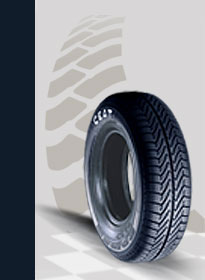
Ceat now is in the fourth position interms of market share. The brand is well established in the Heavy commercial segment with amarket share of 19% while in the car radial, it has only 10%.
Ceat is famous for its Tagline " Born Tough". It is one of the best positioning you can have in the industry. The mascot Galloping Rhino exemplifies the positioning of the brand as the tough brand. Ceat used this mascot and the positioning during the nintees with lot of effectiveness.The website of Ceat talks about the target segment as Strong Men who are Dynamic and Adventurous which personifies the brand DNA. Ideally this brand could have been an icon in the market . But it did not become one.
For some reason ,the brand became invisible.The company may have chosen to concentrate on the OEM segment where more than branding , Sales effectiveness counts. Together with the aggressive media campaigns from MRF and JK , the brand was sidelined in the car/bike segment. The problems with Industry interms of rising input costs and reduced margins have added to the problems for this brand.
Ceat is a brand which have a good brand recall and equity. The quality aspect is questionable since the brand is featured at the lowest position in the JD Power surveys. With the entry of big international names like Bridgestone, Michelin & Goodyear into the market has made the task tough for the Rhino. Ceat had it been aggressive in brand building could have positioned itself as a premium brand for SUV and similar segments. The brand with its exceptional positioning platform has not being able to realise its potential in the point of view of a marketer.
Ceat : Born Tough, Mellowed Later.

source: domain-b.com,ceat.com,businessline

Monday, October 09, 2006

Coffy Bite : Coffee or Toffee

Brand : Coffy Bite
Company: Lotte India
Agency: JWT
Brand Count : 137

Coffy Bite is a power brand in the Rs 1500 crore Indian Sugar Boiled Candy market.This 100 crore brand has a history of 18 years of existence.

Coffy Bite is one of the brands which I grow up with. The brand is unique and its positioning and ad campaign was one of the best in that era. The brand is in the coffee category which is around 15% of the Sugar boiled candy category. Coffee Bite have around 9 % market share in the SBC segment.
Coffee Bite was introduced in India by Parry's confectioneries of the Muruggappa Group. This was the flagship brand of Parrys. Later in 2004 , Parry's confectioneries was sold to The Lotte group.
Coffee Bite is famous for the " Coffee -Toffee " argument followed by the tagline " Its a Coffee in a Toffee" . All the campaigns of this brand was a fun to watch and as a product, the brand offered excellent taste and quality. Overall this product was a winner. The brand enjoys a recall of as high as 85%.
With the entry of Big names like Perfette, Parrys faced intense competition in the market for all its major brands. Along with this heat, the company faced pressures in pricing coupled with rising raw material costs. Infact, these issues are still haunting the confectionery manufacturers.
The candy market is faced with two marketing issues
a. The product: since the product is purely an impulse product, lot of money has to be spent on the brand and also on developing new variants to create and sustain excitement.
b. The Price: The consumers in this segment is price conscious. Because of the competition, companies cannot afford to price the product at a premium and renounce volume. With the 50 paise price point becoming the industry norm, most of the companies are facing profitability issues.
The problem that Coffy Bite faced was again the issue of relevance. Because of some reasons, the brand missed the new generation. The brand was perceived to be " Old". Hence even though the recall was high, the actual purchase was as low as 20%.
The task for the new brand owners "Lotte" was to make the brand more relevant to the new generation. By New Generation , I mean those kids born after1990's : the liberalisation child.
Lotte changed the packaging to make the brand more contemporary and youthful. The communication also was changed. Thank God, the brand managers did not change the famous " Argument". So the argument continues. The new baseline is " Enough to start an argument" was an unnecessary change for this brand which is famous for its " Coffee in a toffee" baseline. The brand owners has to think as to who is bored by the old baseline, company or customer? As a customer I prefer the old one. I think that the brand need not change the taglines and positioning to become more relevant.
Since the category is Coffee, you cannot have any other taste, that can give some consistency to the communication.I hope the owners will not come up with variants like Pineapple coffy bite. Besides the taste, the "Coffee -Toffee" argument gives the creative guys lot of things to work with.I feel that this brand should take the " Topical" advertisement route perfected by Amul( discussed somewhere in my blog) which will be enjoyed by all. One more major positive for this brand is that it is more of a family toffee that gives it a huge market to tap.

Coffy Bite is a brand that has a unique space in the mind of the customers. Is it a Coffee or a Toffee.. the argument continues.

Source: Businessline, agencyfaqs,fnbnews.com, lotteindia.com,economictimes.com

Saturday, October 07, 2006

Cerelac : In a Tough Terrain

Brand : Cerelac
Company: Nestle
Agency: McCann Healthcare


Brand Count 136

Cerelac is the market leader in the Rs 3oo crore Baby Cereal market in India. With a market share of 85%, the brand have a huge equity in the Indian market. The brand right now is facing the worst nightmare of its lifetime .

In Kotler's Marketing Management text, he elaborates on the various external environmental factors that affect marketing . In that chapter, he talks about the regulation and laws affecting the marketing of a product. Cerelac is a classic example of Regulations negatively impacting the marketing of a brand.

The infact foods market is a very sensitive market. Since it is concerning infants , the stakeholder's interests are high. In India the market is regulated by an act IMS act of 1992. The act lays down the rules for marketing infant foods and other products in the market. Earlier the law prohibited any advertising and marketing campaigns for baby foods for babies under 4 months of age.Recently the act was amended and restricted any promotion of foods for infants upto the age of 2 years. This amendments was a severe blow for Cerelac whose target market was infants.
Along with this regulatory factor , other factors also affected this brand. The major influencers of this product ;the doctors began recommending normal food for infants. Another major influencer WHO began global campaign on promoting breast milk and the government began to demarket milk substitutes.
The marketers (generally speaking) were also responsible for creating such a situation. The brands were promoted using claims not validated and there were also quality and health issues that was ignored. Seeing all the chubby babies on the ads, it is said that mothers started feeding infants with artificial foods that may have caused health problems. ( I have not yet come across any such serious health issues in kids who took these foods).
The new amendment prohibits use of baby models in the packs and restricts any form of promotions including sponsoring doctor conferences, surrogate ads, events etc. For sure this may have a huge impact on the market for such kind of products.
Sensing the threat to the category of Cerelac, Nestle has launched a brand Ceremeal ( a porridge) for kids aged above 2 years.
Now Cerelac sells through word of mouth publicity. The product will sell because there is a need for such nutritional infant foods in the market. Even there is going to be a huge potential for infant milk substitutes because of changing lifestyle and the fact that there is an increase in the number of working mothers.
Cerelac as a brand has not written off its future. In 2003, the brand launched a new formulation Cerelac 123 aimed at different stages in a baby's growth chart.
Since the brand is not advertised, the positioning is not very obvious. The brand is basically positioned as a highly nutritious food for infants.

So here the million dollar question for the marketer is this :
How do you promote such a product where there cannot be any promotion?
Surrogate advertising will be caught by the civil society workers and unnecessary controversy will be created. Events are also ruled out.
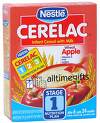
As of now the company rely on the shelf promotion for the product. The company has launched lot of flavours and variants in attractive colorful packages that give a banner effect at the shops.
The product is priced at a premium and does not have any sales promotions giving the company value growth.Since the brand is facing little competition, the lack of media promotions may not hurt the company too much.
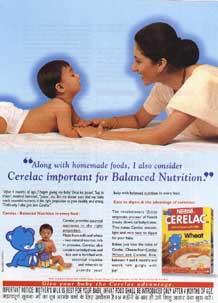
One thing I have noticed is that the brand has a cute mascot or brand character . It is a blue teddy ( I am not sure whether it is named). If the brand wants to aggressively promote, then Teddy can show the way. Start giving away this small teddy with Cerelac and kids are gonna love it. The marketer can do wonders if they have a cute Mascot /Character.
Cerelac has one, use it.
source: businessline, agencyfaqs, magindia, nestleindia
Disclaimer : This is an analysis of the Cerelac brand in the point of view of a marketer, not a promotion of this brand.

Friday, October 06, 2006

Cuticura: Leaving You Speechless

Brand : Cuticura
Company: Cholayil
Agency:Rediffusion

Brand Count:135

Cuticura is an International brand which has a history of 200years. Once synonymous with talcum powder, this brand was pushed to oblivion because of marketing myopia or marketing laziness.
Cutucura came to India 80 years back.Cutucura was owned in India by Muller&Phipps. Globally this brand was owned by Keyline Brands which was acquired by Godrej Consumer products in 2005. Interestingly the brand is owned in India by Cholayil who are the marketers of Medimix soaps.Cholayil refuses to sell the brand to Godrej. Godrej hence have the rights to the brand outside India. It looks like a typical hindi film story script. Cutucura may be crying " Main kon hu, Main kahan Hu, Mera papa Kaun hai"?

Cholayil acquired the brand from Muller in 2002. The brand was given a make over and the new owners was trying to revive the brand. Cuticura was a leading brand of talcum powders in India in the 80's. Indian talcum powder market is estimated to be around Rs 600 crore. In the late 80's the brand faced competition from HLL and Cuticura was not able to sustain in the market.One major factors was that the Muller underestimated competition. The brand failed to change . Today the talcum poweder market is dominated by HLL's Ponds with 65% share.

Cuticura's stronghold is the southern market where it claims to have a share of 30%. The brand still holds equity in this market. So for Cholayil who markets Medimix, this brand gives a platform to get into personal care business.
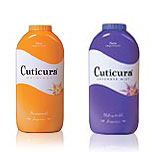
Cuticura is known for its fragrance. The classic brand also famous for its orange and white packing which still has a huge recall. Cuticura while retaining its classic product launched a lavender variant in 2003. Reports suggest that the variant failed to make any ripples in the market. But these efforts helped the brand to post a decent turnover thanks to the brand equity. Now this brand is worth Rs 10 crore.
Although the Cholayil group has taken serious steps in reviving the brand, the campaign lacked the punch needed to propel the brand to new heights. The brand still retains the classic positioning based on fragrance. The new tagline talks about the brand leaving you speechless . Although creative idea is OK, the execution is horrible. The hyperbole fails to catch the imagination of new generation.

The biggest challenge that the brand face is that its core users have become old. The customers who liked and used this brand have now become old and the new generation does not know this brand. Hence the brand has to be relevant to the new generation competing with the power brands like Ponds.
2006 saw the brand extending to deodorants. The extension was branded as Cuticura DeO2.The main USP of DeO2 is its ingredient Farnesol. The brand has the tagline " Let your underarms breathe". Although a not thrilling tagline, to some this make sense because this product will help you smell good without inhibiting perspiration which is an important function of the body. Most of the deos inhibits perspiration to control the bad smell.
Unlike the talc ad, the DeO2 campaign is carefully executed to appeal to the newgen. Cuticura DeO2 will be pitted against Rexona, Fa, etc in this segment.

The brand has a potential to be a serious player in the personal care segment. The brand has to exploit its brand equity and strive to be relevant to the new generation who may have forgotten this brand
source: historypages.net, magindia.com, agencyfaqs, cholayil

Thursday, October 05, 2006

Stori : Clothes With A Twist

Brand : Stori
Company:Chaya Garments
Agency : Saatchi & Saatchi

Brand Count : 134

Stori is a mischievous brand. Launched in 2000, Stori is a premium casual wear brand from Chaya garments from Bangalore. Stori caught the fancy of the customers from the launch itself through out of box creative advertising campaigns. The brand can be called as an " AXE " of this segment.
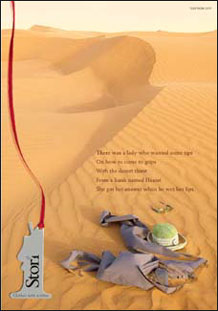
Stori is positioned as a Brand with a Twist . The tagline says " Clothes with a Twist" . The basic idea of the campaign is to project this brand as a brand with sex appeal. The initial campaigns features a " Mystery Man" who gets all the girls. These ads ( all print ads) were unique in the sense that there are no models featured. The ads have a humour touch to it and a story to tell.The stories are set in different natural settings like Desert, Rain Forest, Green Meadows, Sunflower fields.These campaigns were well recognised and the creative was done by the agency "1point size".
Stori competes with brands like ColorPlus and Allensolly in the Rs 250 crore Corporate Casualwear market . Stori is very expensive and is targeted at the upwardly mobile executives.The brand claims to have 10% market share in this segment. The segment which Stori targets is a tough market and it really takes lot of marketing muscle to break into the customer's mind. Stori was careful in choosing the medium and the message.The main USP of this brand is that it is made only from natural fibre .The company have tried to create a story for the brand and to a certain extent was successful in doing so. But the major hurdle this brand will face will be to sustain the brand in the market. The availability of resources for brand promotion is found to be the major factor that limits any small brand's growth.
The brand has immense potential to make it to the big league even international because the platform which the brand has taken has enough space for the marketer to experiment. The brand can experiment with different "Stori" ies . I shall go to the extent that Stori , if carefully built can be in the leagues of " United Colors of Benetton".

Source:agencyfaqs, businessline, fibre2fashion,financial express.

Wednesday, October 04, 2006

Rupa Innerwear : Ye Aaram Ka Mamla Hai

Brand : Rupa
Company: Rupa & Co
Agency: Bates

Brand Count :133

Indian innerwear market is estimated to be around Rs 5160 crore and Rupa is one of the largest innerwear company in India. The company was established in 1987 has a range of brands in the Men's innerwear and lingerie segments.

Rupa is the company's mass market brand. The brand has the distinction of the first innerwear brand to be endorsed by celebrities ( correct me if Iam wrong). Although an unlikely brandname for a men's innerwear, the brand has around 14% share in the segment. The market leader is VIP with a marketshare of 20%.

The innerwear market is dominated by unorganised sector commanding more than 60% of the market. The branded innerwear market is only to the tune of Rs 750 crore. Recent years saw hectic marketing activity in this segment with foreign and national brands launching their products in the market.

Rupa brand has been seriously nurtured and the owners has been using Stars to endorse the brand. The major stars who endorsed Rupa range include
Govinda for Frontline range replaced by Salman
Saif Ali for Bruno
Aishwarya Rai for Softline range
Lisa Ray for Bruno for Her.
This has ensured that the brand receive a mass appeal. The brand is positioned on the platform of comfort and the tagline is the famous " ye Aaran ka mamla hai".
2003 saw the company's foray into the premium segment of men's innerwear with the brand Euro. The premium segment is worth around 120-150 crore and is witnessing lot of competition. Global majors like Sara Lee with Hane's brand and domestic majors like Color Plus, Van Heusen and Peter England has launched its range in this segment.
Euro is positioned as an upmarket brand and is not relying on Stars to promote the brand. The brand is positioned on "sex appeal" and the TVC of the ad features the man being "assaulted" by ladies . Euro also is the brand that came out with the " Bacteria resistant " innerwears. The brand is said to have captured around 20% market share in this segment. Rupa has roped in Alyque Padamsee as a marketing consultant to develop this brand.
With all the major brands eyeing for a share in one of the largest and most potential innerwear market in the world ( just look at the population), Rupa is bracing itself for a tough marketing warfare. Rupa has been careful in communicating and positioning its brand to the masses. But since the brand is relying on Bollywood stars and currently its ads are dubbed in the Southern market, VIP is dominating in the southern market. Rupa may have to think about having some campaign flexibility for tapping the market in the south.The greatest challenge for any innerwear marketer is to fight the unorganised sector which dominates this market coupled with cheap imports.
With the launch of Euro, Rupa is testing its marketing acumen in one of the toughest market. After all "Ye Aaram Ka Mamla Hai"


Source: magindia, agencyfaqs,fibre2fashion.com, businessline
Tuesday, October 03, 2006

Cadbury Perk : Time to Perk Up

Brand : Perk
Company: Cadbury's
Agency: O&M

Brand Count : 132

Perk was Cadbury's foray into the chocolate wafer bar category. Indian Chocolate market is estimated to be around Rs 500 crore. Although there is huge potential for this market, the penetration of this product category is very low. The percapita consumption of Chocolate in India is 160 gm compared to 8 kg in UK. The urban penetration is abysmally low at 15%.

Perk was launched in 1995. The product gained immediate consumer attention because of the nature of the product and some smart advertising. During my MBA days the competition between Nestle Kitkat and Perk was a hot topic in the marketing sessions. 11 years after the launch, Perk has not made a headway into this market. Reports suggest that both Perk and Kitkat is facing issues of stagnation.

Perk is a quasi chocolate product with wafer coated with chocolate. The product launch was a classic case of smart advertising. The brand was launched not as a chocolate brand but as a " Smart Snack" that can be had any time, any where and whenever you feel hungry. That was an awesome positioning and execution was perfect with Preity Zinta endorsing the brand. The tagline " Thodi Si Ped Pooja" was a classic tagline to have.
While Perk was taking about snacks , Kitkat was busy teaching its customers how to eat a Kitkat. Both campaigns propelled both brands into a great start. But soon both of these brands faced stagnation.

Perk tried to getover the stagnant market by launching a price led intiative. Like sachets, the brand launched variants at a price as low as Rs 5. This offensive prompted Nestle to launch Kitkat at a lower price.
Although the reduction in the price expanded the market to certain extent, the growth was not as expected. Primarily this is because of the characteristics of Indian market where Chocolates are not as popular as in the west and there is competition from the lower priced " Mithais".

Talking about the brand Perk, after the initial excellent start, the brand failed to capitalise on the positioning of the brand. Inorder to create more excitement, the brand tried to experiment with its successful positioning and changed the positioning to some bull shit.
I again wonder why brands change their successful positioning. Perk as a snack is one of the best positioning you can have. Preity is one of the best brand ambassador and both the brand and the model gel with each other.

From the " thodi si ped pooja" the brand took the positioning " kabhi bhi , kaise bhi" and then to some other taglines which I don't remember. The latest ad of Priety's encounter with Yamaraj again is a Damp Squib and is not funny as it is intended. The tagline is also not catchy and it says " baki sab Bhula de" meaning " forget all else".The problem with Perk ads is its over reliance on being funny. After the funny campaigns from Perfetti, every brand is trying to make the customers laugh. Humour if not carefully used will create a negative impact. Perk's initial campaign had a very light humour or a rightword will be playfulness or bubbly exemplified by Preity. But when the brand tries to be outright funny, the entire campaign becomes a flop. Perk has fallen to the trap of trying to be funny while the brand does not need to be funny.

Perk is having serious competition from Kitkat and Munch. The current positioning of Perk is similar to that of Munch which is endorsed by Rani Mukharjee. Perk can have solace that Munch ads are also lousy.
The fact that the market is stagnating shows that the brand is not able to create a place for itself in the mind of the customer( read Positioning) and it is competing with other full chocolate brands like CDM. Perk's initial positioning had they continued it could have helped the brand to have a space for itself different from other brands. Perk could have encouraged its customers to keep a Perk always at home and with them because no one knows when they will be hungry.
Source: superbrandsindia,agencyfaqs,businessline, strategicmarketing

Saturday, September 30, 2006

Snuggy : Everyone Loves A Snuggy Baby

Brand : Snuggy
Company: Godrej Consumer Products
Agency: Mudra

Brand Count : 131

Snuggy is India's first Diaper Brand. Launched in 1987 by Shogun Diapers Ltd, Snuggy was acquired by Godrej in 2003.
Indian diaper market is worth Rs 100 crore and growing at the rate of 10 %. The market is dominated by three players

Huggies from Kimberly Clark & Lever with a market share of 70%, Pampers of P&G with 20% and Godrej with Snuggy with around 10%. Even after 20 years of the introduction of this product category, the category is not being growing in line with the potential.
The main factors that inhibit the growth of this category are the Cultural factors and the price. Indians are not used to this product. This category is concentrated on urban market. Diapers when launched in India was priced at a premium which kept of the majority of the customers. When launched, the price for diapers for a pack of ten where any where between Rs 150 - 200 which was perceived to be pricey.
Diaper is competing with the traditional way of using Clothes which has the advantages of reuse,inexpensive and to a certain extent more healthier for the babies. Healthier in the sense, diapers used to cause rashes while clothes didn't. While Diapers has the advantages of convenience and cleanliness.
In India, unlike the west, parents tend to use Diaper on babies only during travel to minimise cost. Inside the house they use the traditional method since no one is bothered what the kids do inside a house.
In the last two years , the marketers have tried to reduce the price of diapers to induce more usage. The prices have come down to Rs 10 per piece. But still the market has not grown to the expectation. The reason is the simple economics. A diaper at best can be used on a kid for around 3 hrs ( that too is risky) that calls for 4 diapers per day and 6 if also used at night. That will cost an amount ranging from 40-60 per day working out to Rs 1200 to 2000 per month on diapers alone. That is totally unimaginable expense for a middle class family.
Hence in the Brand Report Card, the category scores very low in terms of value to the customer. Since the product is a use and throw kind, the customers try to use the product only during travel.
To reduce this price barrier, the marketers have come out with nappy pads that costs around Rs 5 per piece that is much more affordable but again the value factor is not justified, because one has to change nappy pads more often hence when the total cost is taken into consideration, diapers and nappy pads costs equal.
Diapers are usually imported from other countries and branded in India. This product category also face competition from cheaper imports .
Snuggy although is the pioneer in this category is dominant only in the south. With the distribution reach of Godrej, this brand has a good potential to increase its share in other markets also. Godrej has plans to extend the brand to other children's products.
The challenge for this brand is to expand the diaper market. For that the company may have to create a price disruption. I feel that the right price for Diaper to break into Indian consumers will be Rs 5. For nappy pads it is Rs 2. It is a tall order and with the current cost structure, it may not be possible.
But that is a challenge that companies should take if they want Indians to use this product more. The potential is high because of the changing psychographics of Indian consumer. With both the couples working and kids being sent to Playschool even at the age of 2, there is going to be a huge market waiting to be tapped.
Source : godrejsnuggy.com, agencyfaqs,dnaindia

Wednesday, September 27, 2006

Kinetic Blaze : Shortcut To Fame ?

Brand : Kinetic Blaze
Company: Kinetic Motors
Agency: Grey Worldwide

Brand Count : 130

Kinetic Blaze is the new launch from the beleaguered kinetic motors. The company which pioneered the concept of gearless and self start scooters are now in crossroads. Kinetic after breaking up the JV with Honda faced tough competition for Honda which virtually wiped off Kinetic scooters from the market.

Kinetic was not able to produce any blockbuster products other than the most popular Kinetic Honda. The launches like K100 and Nova range bombed in the market. Honda while captured and redefined the entire scooter market with its Activa.
2006 saw the launch of Kinetic Blaze. Blaze is the 1st product from the much publicised seven vehicle Italiano series. These designs are bought from the world famous Italjet Moto. The designs are done personally by Leopoldo Tartarini, the head of Italjet Moto.

Blaze is so far the most powerful scooter in India. This 165 cc mean machine is huge and heavy. Blaze was all set to redefine the scooter market in India. So far so good....

Kinetic was clever in rightly identifying the problem. The brand had took a beating after Honda left.The brand equity suffered a hit after many new product failures.So the primary task for the company was to reposition and rejuvenate the brand and give it a contemporary look . For that Kinetic needed something that could be the talk of the town. So wisely it invested heavily in getting the best designers and conceived the seven series with emphasis on style and "machoness".
But all these efforts went into mud because the agency played spoil sport. The launch ads ( TVC) was nothing but a marketing disaster. The agency just killed the product. The ad talks about Rohit Varma.
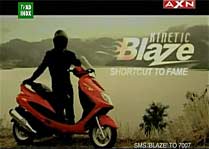
We had enough of Digen Varma and Balbir Pasha. Then here comes Rohit Varma jumping from the tenth floor of the flat on a Kinetic blaze and a bunch of cracks(fans) cheering.I wonder how this guy managed to take this heavy thing all the way up. Then the baseline says " Short cut to Fame". It is one of the lausiest positioning statements ever.

The product is supposedly good; that is what most of the reviews say. The scooter is huge with the size of Pulsar and wheel base of a Bullet and weighing 135 kg. Hell this is a macho scooter that too with a mileage of around 50 kmpl ( under dream conditions), and look at what the agency has done. No positioning and no creative thoughts only bull shit.The brand had lots to talk about. It was male, powerful, stylish and safe. The TG could have been those who wanted a powerful city rider.Here much more rational communication was needed instead of hyperbole.

With a price tag of Rs.50000, this brand is going to compete with none other than Pulsar. The question is will you opt for a Blaze or a Pulsar? Hence the success of this brand will be heavily dependant on the way the company position the brand. No other bikes have so far being able to dethrone Pulsar , so does Blaze have a chance? With this stupid positioning, I will say No chance.
Blaze was the right vehicle for rejuvenating Kinetic Brand. It could have been a Pulsar for Kinetic had it marketed it right. Pulsar captured the attention of TG with its Definitely Male campaign. But what about Blaze ?
Blaze if positioned properly at best would have been a niche product. The brand would have appealed to people who did not like Bikes. But the current positioning dampens every chance of its success.
Kinetic have to realise that there are no shortcuts to fame.
Source : Businessline,Indiabikes.com, autocarindia, agencyfaqs,kineticblaze.com

Monday, September 25, 2006

Charagh Din : CD Rocks

Brand : Charagh Din
Company: Charagh Din
Agency: Network Advertising

Brand Count : 129

Charagh Din Shirts otherwise popularly known as CD Shirts is a unique brand. CD shirts are known as the only One store readymade brand in India. The brand is available in its showroom in Mumbai and nowhere else. The CD showroom in Mumbai is considered as the largest shirt store in the world.

Charagh Din was originally New Lord & Co came into existence in 1947. Two years later this small tailoring company was bought over by the enterprising Mr Arjan Daswani which converted this shop into a wonderful brand. CD has grown from a 800 sqft shop to 100,000 sqft shop because of the owner's never ending passion for quality and marketing excellence.
The brand's fame began to spread from Mumbai to other parts of the country and CD began to figure in the shopping list of those who travel to Mumbai. I have friends who buys 10 shirts when they visit Mumbai and wears only CD shirts.
CD shirt was built on three basic qualities
a. Sophistication
b. Good Taste
c. Special Identity.
The brand was earlier known as the " Shirt that Fits". The word of mouth spread fast with the increasing list of Who is Who began wearing this brand. More over CD was the first branded party wear shirt in India. The brand never failed to experiment with design and it gave the brand a contemporary look even after 60 years of existence.
For every successful brand the challenge comes when the brand begins to expand. CD does not want its USP of one store brand to be diluted by opening multi-location stores. Hence the brand embraced the net to expand the volume. In 2001, the brand was available online. The owners feel that the net will take care of the reach while the brand could be built through the media.

Recently the company have started aggressive promotion for this brand. The baseline of the brand has been changed to " CD Rocks". The ad features Czech models partying in a typical party locale. The ad is poorly made and does not convey any tangible value of the brand. The aim of the campaign was to project CD as a party shirt to the target segment of urban youth . But the execution and the models was a flop ( my opinion).
*****
Dr Keller's Brand Report Card for Charagh Din
Delivering on Customer's Desires: Positive since the brand has been maintaining its quality and design excellence. The product is put through rigorous quality checks and the company makes sure that the new designs are launched every month.
Relevance: The brand still has relevance in today's market. There is still a need for a brand which is young and vibrant
Value: CD shirts are priced quite reasonably and this makes the deal more attractive
Positioning: The brand has made a change in its positioning which I think is a negative factor. The new campaign have failed to convey any values or strength of the brand.
Integrated Marketing Activities: The brand has not fully integrated its activities on the web. Since this brand has an online store, no aggressive online promotions are seen. I haven't yet received a single e-mail from the company promoting its range.
*****
Charagh Din is a brand that has immense potential. It has the heritage, quality, Share of Mind, brand equity and the uniqueness. But the company seems to have forgotten its strengths. The brand is wise to have retained its uniqueness of one store brand by using web as the alternative channel. But still it has not fully harnessed the power of web as a media for brand building.I hope that in the quest to capture the mind of the urban Yuppie, the brand does not dilute the equity that was built over time.
Source: Charaghdin.com

Thursday, September 21, 2006

Hero Honda Street : RIP

Brand : Street
Company : Hero Honda


Brand Count : 128


Hero Honda Street was the first venture of Hero Honda to the the scooter category. Street is not a scooter but a step through bike. The product category lies between a Scooterette and Scooter. Street launched in 1997 died a slow and quiet death.

The product was launched as a step thru bike was not entirely new product category. There was a step thru bike running in the Indian roads named Bajaj M80. Street wanted to create a market for itself or perhaps a new category. But the product failed because it was haunted by M80.

Street was the Indian version of the world famous Honda Cub series of stepthrus. Honda Cub was the world's largest selling single model bike which has sold more than 2.5 crore units. But how come such a product fail in India.
The case is about marketing mistake.The product failed in all aspects of marketing mix except the distribution.
The product was not good enough. It looked like a glorified M80 which was used by Fish vendors and the like. M80 was the cheapest and rugged step thru from Bajaj aimed mainly at the vendors who had bought this product not for its looks but for the price and utility. Since Street exactly looked like M80, it put off all the urban buyers.
The brand was priced extremely high. Hero Honda thought that because of the success of its bikes, they can charge the Street a premium but this price around 30% higher than M80 failed to show value to the customers.
The campaign was also not successful. The initial campaign tried to teach the customers the new Clutch less gear system and its efficacy, the customers was not impressed with this feature. Infact this gear system is famous elsewhere in the world but in India it did not click.
I wonder why Hero Honda ventured into bringing this model to India fully knowing that an exact replica is selling here that too at a lower price and quality ? It is plain arrogance or myopia trying to sell such a product with out any design change. Hero Honda thought that the brand name Honda will differentiate the product but it didn't happen. More over the product did not offer any value proposition to the customer except that it has a unique gear system.
The brand was also not sure about the target segment ,whether it aims at the gender or any specific category. Kick start mode eliminated the entry chance to the Ladies category and the lack of styling repelled the guys.
Brand Report Card for Street ( Dr Kevin Lane Keller)
Delivering on Customer's desires : Negative . The brand failed to understand the need for the customer in the aspect of design of the vehicle.
Relevance : The category had some relevance since the customers were looking for a powerful scooterette. Most of the mobikes were sub 60 cc. But the brand failed to capitalise on this opportunity.
Value: Negative. The high price of the brand did not offer any value proposition to the customer. Although the product was of high quality
Positioning : Negative. The brand was not positioned on any sustainable and important feature. This prevented the effective communication of value to the customer. This was one of the major cause of this brand's failure. Besides the Points of Parity with M80 created problems for the brand. The owners failed to foresee this problem.
Integrated Marketing Activities: Since the problem was with the basic design of the product, there was not much the other activities could do. The marketing activities was bound to fail.

Street could have been a success if it had changed its design. Indian consumers are very discerning and value conscious. This brand failed to understand that.

Monday, September 18, 2006

Hidesign : Truly International

Brand : Hidesign
Company: Hidesign

Brand Count : 127

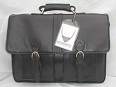
Hidesign is a brand that is truly an international brand that is made in India. Born in 1978 as a one man craftsman workshop, this brand has gone places.

Hidesign is India's premier leather goods company that makes leather bags, briefcases and wallets. This 90 crore brand is the Indian brand that features in the premium international stores worldwide. The Indian leather market is expected to be around Rs 1000 crore and the branded market is around 120 crore.
Hidesign is a brand that was built overtime through careful brand building . The brand which was launched as an export brand came to India and surprised to find the reception it had, despite astronomical prices. The brand came to India at the right time when the Indian consumers are splurging on lifestyle products.

Hidesign is targeting the upwardly mobile educated internationally minded executive. The brand is known for its craftsmanship and the quality of its products. All these years this brand has never compromised on quality. The main USP of this brand is its craftsmanship. The brand still uses the traditional craftsmanship and 70% of the work is by hand. The brand depends heavily on the craftsmanship. The core value of the brand is its attitude, tradition and its commitment to environment. Instead of using the much polluting dyes, the brand uses vegetable dyes .
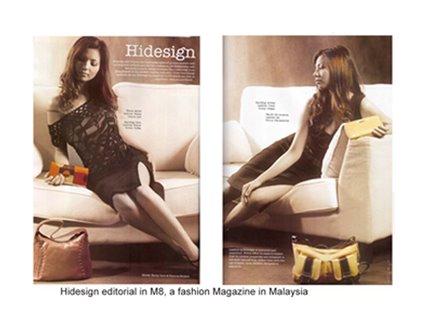
The brand is positioned along the core values and the craftsmanship. The campaigns are trendy and the media is mainly magazines. Earlier in 2000 the brand initially was projecting quality as its major focal point. Now they have realised that despite the positive feelings, the brand lacks the attitude and emotional attachment . Hence the brand is on a campaign to connect to the customer emotionally.
In the premium segment , the brand does not have any domestic brand competition.The competition is from the Italian brands that are available in the upmarket stores. The entire category is dominated by the unbranded players and there is little efforts to brand the products.


The Brand Report Card (Dr.Kevin Lane Keller) for Hidesign
Delivering On Customer's desire: The brand has been able to identify and satisfy the customer's desires. The customers were in need of a brand that can offer them quality and looks which was lacking in the unbranded products.
Relevance: The brand is relevant to customer because of the change in the lifestyle of the upwardly mobile Indians
Value: Although the brand is priced astronomically , the target group is finding value in this product. But with these prices the brand is out of reach to most Indians.
Positioning: The brand rightfully identified its core value and the positioning is in line with the strength of the brand . The choice of the media and the copy of the campaign also reflects the positioning.
Portfolio: The brand has wide range of models and is seriously looking into expanding to different segments with in the category. The company is planning to introduce bags for the college going under a separate brand name.
Integrated Marketing Activities: The brand has been using its stores and all the marketing mixes carefully in promoting the brand
Management: The brand has been built over time and the management has been careful in building the core values of the brand
Support: There has been lot of support for the brand building efforts . The company has been spending the money wisely and carefully.
Marketing: The overall marketing activities has been perfect and has helped the company to create a world class brand.
Hidesign is truly international brand. It is a showcase of Indian marketing acumen and proves that Indians can make a world class brand.
source: agencyfaqs,hidesign.com,businessline.


Friday, September 15, 2006

Eyetex : Eye On The Next Generation

Brand : Eyetex
Company: Aravind Laboratories

Brand Count : 126

Eyetex is one of India's oldest Kajal. Kajal is the traditional form of eyeliners. It is a Collyrium manufactured traditionally using natural ingredients. Eyetex was started in 1938 by Mr Srivasudevan and in 1958, the company was taken over by Mr. AV Srinivasan.
Eyetex brand is one of the largest selling Kanmaye or Kajal in India. The brand is a small player in the Rs 2.2 Billion Indian cosmetic industry. The brand is facing competition from established players like Lakme , Revlon and other international brands and is facing with the problem of the product relevance in the changing Indian psychographics.
The tradition of applying Kajal to the eyes dates back to centuries .Even mythology have references of this product. Traditionally grandmothers used to apply kajal to the infants to prevent eye ailments. Ladies used to apply kajal using the fingers and the Kajal used to give a smokey appearance to the eyes.

Eyetex have been considered as a trusted brand in this segment. The brand although not much advertised, had immense positive word of mouth publicity and the through generations this brand has been passed on.
The brand is now facing the threat from the changing lifestyle of its TG. I am not sure whether the younger generation uses Kajals these days. The place of Kajal has been taken over by the modern Eyeliners. With international brands having the full range of these products that too in different colors and features, the survival of the traditional Kajal is at stake.
Eyetex is positioned as a trusted brand that is prepared from natural oils . With little or no promotions, the brand has a huge recall among the Indian ladies but with the new generations, Eyetex is not much popular.
Eyetex too has tried to change with times. From the traditional round shaped pack, it had metamorphosed to user friendly stick and eyeliners also. But the brand did not change with time. Eyetex is still banking on the trust and the equity of its customers who are fast becoming old. When there is a Revelon or Lakme eyeliner will the new generation pick Eyetex?

Compared to modern eyeliners, Kajal can be messy and there is a chance of the kajal spreading unevenly or smudge. With the modern eyeliners offering waterproof eyeliners and with different colors ( may be) and innovative extensions like Loreal Voluminous Mascara, Eyetex suddenly may find irrelevant for the modern consumer.
The silver lining is that for the ordinary Indian women who may not have graduated to eyeliners and mascaras, Eyetex brand is still relevant and the price so affordable. Eyetex may have missed the urban kid but the core segment may be still there. I am also not sure whether the urban girls bother about putting kajal everyday. In this era of fast life, these products are used only on occasions.
Eyetex has also taken a bold step to enter into color cosmetics with the brand Dazzler.Eyetex here is going to compete with the " Who is Who" of the global cosmetic industry. I am not sure whether Dazzler will be able to leverage the equity of Eyetex. Eyetex could have consolidated its position by introducing water proof eyeliners and modern " eye beauty care" solutions rather than venturing into categories that are too tough to crack.
The task of Eyetex should be to make the brand relevant to the next generation. It is going to be expensive and in this case a celebrity endorsement will help the brand to a great extent.
Source: Divanee,indiatoday,eyetex.com

Wednesday, September 13, 2006

Timex : What Next

Brand : Timex
Company: Timex India
Agency: JWT

Brand Count : 125

In the 30 Million units per year Indian watch industry, Timex is a brand is living its second life. Launched in 1992 as a joint venture between Titan and US based Timex, this brand was virtually dead during the early 2000. The company suffered huge losses and the brand was pushed to oblivion.

Timex is America's number one brand. in 2003, the brand celebrated the selling of a whopping 1 billion watches. With a history dating as early as 1857,the brand is known for its technological excellence. Experts say that in US, Timex is to watches what Microsoft is to Computers.

In India, Timex is a different story all together. Launched as a mass market brand, Timex was in rough terrain from the start itself. In the previous blogs, I have mentioned brands which failed because of Premium pricing. Here Timex suffered because it sold cheap during the initial years. Although Indian consumers are value conscious, low price = low quality is the attitude that still pervades. It is not the price but the VALUE that matters to Indian consumers.The initial mass market focus diluted the international image and brand equity of Timex. So when Timex and Titan parted ways, Timex was having zero brand equity.

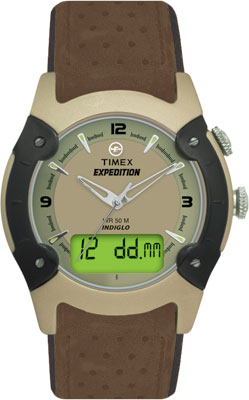
Timex was the master of innovation. In 1992 Timex brought the INDIGLO feature in watches . Indiglo is the worlds first electroluminescent watch which gives a beautiful green light at the press of a button. Now 70% of Timex watches have indiglo feature as a standard. Besides Indiglo, Timex along with Microsoft launched the Datalink feature that allowed downloads to the watch from a PC. Timex Ironman is the world's largest selling sports watch.
Timex brand is known for its style , multifunctionality and durability. The watch is technologically superior than any other watch brand. Timex is used by the Who is Who of Celebrities from Bill Clinton to Bill Gates, Terminator to George Bush, Brett Lee to Harsha Bhogle. Even with these brand qualities, Timex is still no where compared to Titan in India. That is because the brand owners failed to position the brand properly. In the initial years, the focus was the volume which diluted the brand and then came the lack of positioning of the brand.

Timex have the age old positioning of " Technology that keeps you ticking". In India, the brand has changed the tagline frequently. At one point of time, the tagline was " Time on your side" . Now the brand comes with the tagline " What next". Constant changes in the positioning statement will inevitably confuse the customer. Globally the brand has the USP of a innovation leader . Technology first was the brand motto. Along with this the brand is perceived to be stylish and durable. But sadly in India, Timex failed to communicate its core brand values to the consumer.
2003 saw a rejuvenation in Timex. The company restructured and a new marketing team was in place. The brand was repositioned as a premium watch and the sub 1500 range was done away with. The brand then concentrated on its core values. Timex have the range of watches like, Matrix, Expedition series, Brett Lee collection, Big Bold and Beautiful collection etc.

But even during that time also the promotions were not upto the mark. For example there was a range of Watches with a feature of Perpectual calender that does not need any adjustment. Timex spent lot of money on this feature but did not highlight the brand value. When Citizen positioned its Ecodrive, the watch was given more prominence not the feature. For the perpetual range the tagline was changed to " Time on your side". Timex also gave importance to the retail push by opening lot of Shop within Shop outlets named Club Timex.

Timex is running a new commercial for the Expedition range which looks good. But for that range the tagline is " What next". I am now pretty confused about the real intended positioning of Timex. May be the company wants to say to customer that Time moves so does Timex. In my humble opinion, Timex should align the brand with its global positioning. Timex globally has the tagline of " Be There Now". Since the Indian consumer is aligned to global consumer characteristics, Timex will benefit by having a global positioning since watches are considered now as a fashion accessory.
Source : Businessline, Timex.com, agencyfaqs,

Monday, September 11, 2006

Cadbury's Gems: Nonstop Excitement

Brand : Gems
Company: Cadbury's
Agency: O&M
Brand Count : 124

Cadbury's Gems is one of a kind product and brand. Unrivalled in all these years, Gems hold a special position in the consumer's mind. The brand which came to India in 1968 is still going strong.
Gems is still popular not because of its ads but because of the heritage or should I say nostalgia?
I still remember the excitement I had ( when I was a kid) when my father slowly pushed the Gems through the pack and we used to guess the color of the button that is going to come out. The same excitement I could see in my daughter's face now after almost 20 years. I still buy Gems for my kid not because of the ads but because it is a brand I grow up with. ( sorry for being emotional).
Although 38 years old, Gems managed to stay relevant. A lot can be attributable to lack of competition and the unique taste that the product has. I will say that the brand is still relevant because those consumers of yesteryear's are now the parents and inevitably, Gems will figure in their favorite list of chocolates.

In the recent past I have seldom seen an ad of Gems. A major change in the Product Mix came in the early nineties when Gems reworked on its pricing and packaging strategy. It made a clever move by inventing new price points at Rs 5 making the brand more affordable. In the recent past, Gems pack is available for even Rs 2.
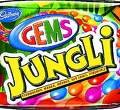
2006 saw the first variant of Gems in the form of Fruity flavours branded as Gems Jungli. The chocolate core has been changed to fruit flavours which is a major change in terms of the brand. Gems is known for its chocolate core with sugar coatings. With this variant, Gems is in a way moving away from its core .
Jungli has given the brand something to speak about. Now lot of promos have started aiming at the target audience ( kids). The ads are OK but not upto the creative standards of O&M. I bought one for my kid but the excessive coloring is a dampener. The color of the sugar coating seems to be too much and caused alarm as to how healthy the color is. The classic Gems do not have that much coloring or the color don't seem to be unhealthy.
I don't remember the old ads of Gems but looking at some of the blogs like Vishalpatel.com , the ads seem to position the brand along excitement. Even during the 80's there was Gems Bond a mascot for the brand. The old ads also talked about creating pictures using Gems. Those campaigns have put this brand firmly on the kids mind that is still making impact.Now Gems has been promoted using events and contests .
Gems have a problem at hand. How to make this brand relevant to today's kids. With lot of action in the confectionery market with lot of brands, Gems cannot rely on the old brand equity. May be the Jungli launch was to make the brand more visible in the segment now but are we not forgetting the classic Gems ?
Although positioned on excitement, right now Gems do not have a solid positioning. I agree that it is one of a kind and there has been imitations that have failed but success should not lead to marketing myopia.
Gems has to consolidate and nurture its core brand to be relevant to the much more dynamic and highly evasive consumer of today. Gems has to make sure that the excitement is nonstop.

Friday, September 08, 2006

Harpic : Ready For The Challenge?

Brand : Harpic
Company: Reckitt Benckiser
Agency: Euro RSCG

Brand count : 123

Harpic is the market leader in the small category of toilet cleaner segment in India. With a commanding market share of 80%, Harpic is a brand that withstood or escaped unhurt the lazy marketing efforts from its owners.

Harpic is a European brand that came to India way back in 1950s. Toilet cleaning market is traditionally dominated by the unbranded Phenols and when considering phenols, the market is worth Rs 500 crore. But the branded toilet cleaner market is minuscule estimated to be around Rs 50 crore.
Harpic unlike other Reckitt brands were given some marketing support from the brand owners. The brand had changed with times and had some careful innovation with regard to the packaging. During 1990's the product came out with a unique nozzle which ensured better reach. Harpic also introduced a Flushomatic variant in line with the changing preference of consumers towards European closets and Flushes. Harpic also initiated a co branding initiative with Parryware to get into consumer mindset early even when he is completing his house.

These efforts together with the lack of competition enabled Harpic command a major share in the segment. But of late the segment is witnessing competion. The major competition is from Sanifresh from Balsara. The challenge of Harpic is to get into the households that are using the cheap Phenol products. The venture of Reckitt with a phenol product bombed in the market.
Harpic is positioned along its triple benefit Stain removing, freshness and germfree. The ads which are criticised for lack of creativity speaks about the Harpic challenge. Celebrity like Aman varma entering a house and cleaning the toilet was rated as the most distasteful ads. But my personal opinion is that the ad conveys the core message. It is a no nonsense ad and is targetted towards the households using phenols and not the educated sophisticated users.
The innovative flushmatic variant was well received in the market But personally I find it difficult to open the flush and place it. Some flushes need screw drivers to open it. But it was a innovative effort that has to be appreciated.
Harpic is a brand that has been trying to break the segment barrier. It is still considered the urban product. In a lighter sense : with millions of toilets around, the potential is immense. I am not sure whether small sachets for single use will work for toilet cleaners ?

May be to break the price barrier, Harpic may have to think out of closet.

Source: India today, agencyfaqs, economictimes,magindia


Wednesday, September 06, 2006

Quaker Oats : Tough Task Ahead

Brand : Quaker Oats
Company: Frito Lay ( Pepsi co)
Brand Count : 122
Quaker Oats is the latest entry into the tough market of branded breakfast foods. Indian Branded Breakfast market is worth around Rs 300 crore. In volume terms it is 140000 tonnes. Oats market is worth around 4000 tonnes.
After the Kellogg's foray in to the breakfast market in 1990, Quaker is the only high profile product launch in this segment. Kellogg's grew the market from 1000MT to around 3000MT through heavy spent in advertising. Now Kellogg's is ruling the breakfast market but yet to break even.
Quaker's launch is significant because it comes from the Pepsi stable. With the marketing muscle and deep pocket, Will Pepsi be able to displace Idli from the Indian consumer's breakfast table ?
All through this decade, Kellogg's has been trying to do that: changing Indian consumer' s breakfast habit. With high decibel promotion targeted at adults and kids alike, Kellogg's was able to make a mark in the Crispy Cornflakes category with excellent brand recall and shelf space. But the breakfast habit still remains the same.
Quaker started testing the Indian market in 2005 and in 2006 the brand was launched across India. Quaker is a brand that has a heritage of over 125 years and is world leader in the Oat meal segment.
The Indian breakfast market assumes significance because of the growing " Health Consciousness" among the Indian middle class. Breakfast is the most important meal of the day and it accounts for 1/3 rd of all nutrient need of a person. Although Indian consumers were not bothered about the nutritional content of their foods, increasingly a trend is visible in Indian consumers becoming more aware about their nutritional needs.
Taking a lesson from Kellogg's, Quaker has launched their products at a reasonable price range even introducing trial packs for Rs 8. The idea is to induce the consumer to try the product and then make it a habit. The 400gm pack with a price of Rs 70 and 200gm for Rs 35 seems attractive compared to other brands. As a sales promotion campaign, Quaker is selling its 200gm for Rs 25.
All these promotions may cause the existing Oats takers to Quaker but how about our man who takes Idli , Dosa ?. That is a million dollar question.
Quaker is launched with a positioning based on Nutrition , Taste and Easy To Cook. The ads says that it takes only 3 minutes to cook ( same as Maggi) But as in the case of Maggi, that proposition will not work with Indian consumers. Nutrition is an important factor and regarding the taste, Quaker has cleverly came out with Masala and cardamom flavours to appeal to Indian Palate.
The main question is should the marketer try to break the habit or circumvent it. Maggi effectively introduced Noodles in to Indian market by not breaking a habit but come around the habit by targetting kids. Kellogg's is still steadfast in breaking the habit for a decade now.
I can tell from my case that I will not prefer oats for a breakfast because of the perception that it is not filling ! I may eat it for nutritional purpose but may not substitute the breakfast. I have seen people who take oats at night after the dinner for health reasons. So taking a cue from my experience ( disclaimer: I can be wrong) Oats will have a better acceptance as a nutritional component in the Indian consumer's meal. Let Oats be a part of Idli and Sambhar for complete nutrition. Once you get to the table then the brand can easily command the Indian consumer's habit.There will be more takers if this food can be positioned as "any time nutrition" rather than as a breakfast cereal. As an aggressive marketer, Quaker is head on in competition with the traditional breakfast foods.
Since this market is small ,the direct competition is less for Quaker. Bagerry is the other brand in the Oats segment . Bagerry is an Indian company which is in the market for over a decade. They are not aggressive marketer and is more of a regional player.
It is going to be a tough and expensive war for Quakers.
Source : estrategicmarketing, economictimes,magindia, sify.com,agencyfaqs.

Sunday, September 03, 2006

Ray-Ban : Change Your View

Brand : Ray-Ban
Company :Luxottica Group
Agency : Law & Kenneth

Brand Count : 121

Ray-Ban is one of the major brands in the Rs 1200 crore Indian Eye Care market.Ray-ban came to India in 1990's .At that time the brand was owned by Bosch & Lomb. In 1998-99 the brand was acquired by the Italian Major Luxottica group.

Ray-Ban originally was born in 1937. Over these years it has created a cult status worldwide. The brand also have a huge fan following in India. Ray-Ban was created as a brand for US Air force during 1937. The Aviator brand became an instant hit and the brand attained a huge cult status after the Movie Risky Business had Tom Cruise wearing the Wayfarer range. All these years, RayBan used movies to popularise the ranges of sunglasses.
The brand had tough times in India. During the late nineties the brand had quality problems. The brand also faced problems in the pricing also. The Shade range of RayBan priced below Rs 1000 eroded the premiumness of the brand.

After taking over the operations in India, Luxoticca group revamped the Indian operations.The brand was aligned to the global positioning and the company decided to have a single positioning worldwide.The quality level was raised. The brand also shed its segmentation based on price points. The low priced brands were removed and the minimum price point was fixed at rs 1500.

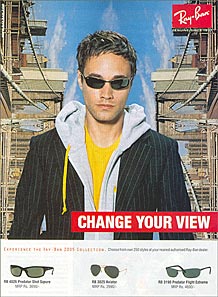
In India Ray-Ban had lot of interesting positioning statements. It had the famous tag line " My Ray-Ban and Me" which highlighted the individualism to the latest tag line " Change Your View".
The brand is now trying to consolidate its premium positioning while appealing to the youth.
Although the Indian eye wear market is worth 1000 crores, the organised sector is only worth Rs.400 crores .Sunglass market is worth only 80 crores. With premium brands like Gucci and Armani rules the super premium segment, the lower segment is ruled by unbranded cheap sunglasses. Ray-Ban is in the mid segment range . Titan has ventured into the sunglasses segment with its mass market range with its Fast Track brand extension.

With over 1200 models and an established brand image, Ray-Ban is ready to explore the rising lifestyle market in India. It is again surprising that no Indian brands is existing in this category ruled by Ray-Ban. The sunglass market is facing the culture issue rather than the competition. Unlike other accessories like watches, Indian consumers have a social stigma with the sunglasses. Eye care against sun rays are not popular concept with the Indian consumer . Still sunglasses are just a fashion accessory rather than a necessity. The tendency to use cheap glasses which is more harmful still remains a habbit with the Indian consumers. RayBan have to spent lot of money to keep sunglass as a priority purchase for Indian consumers.

Will Rayban can change the view is something to wait and watch

Source: Indiatoday.com, magindia,agencyfaqs, rayban website,ebay

Friday, September 01, 2006

Fair &Lovely Menz Active : Change Your Story

Brand : FAL Menz Active
Company: HLL
Agency: Lowe

Brand Count : 120

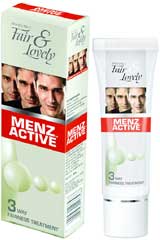
2006 saw the launch of Fair And Lovely’s brand extension Menz Active in the Indian market. Menz Active is HLL’s reply to the much hyped and much discussed launch of Fair And Handsome by Emami Limited.

In 2005 when Emami launched India’s first fairness cream for men, I thought it was a joke on the famous Fair and Lovely brand. Later I found out that it is a serious affair and a not bad idea at all. As I discussed before in one of my blogs, Indian fairness cream market is worth around Rs 1000 crores. But why fairness cream for men? Research suggests that 28 % of all fairness cream users are men. That makes sense for a serious brand in that segment isn’t it?

Fair and Handsome made noise in the market for two reasons First it was a shock Secondly the ads were lousy. Lousy and ridiculous: I must say. But it served the purpose. It became the talk of the town. This year’s launch of FAL Menz Active proves that Emami ‘s brand made business sense.

HLL is using its most famous brand to endorse the new brand. FAL is being used as an endorser to create a positive impression on the potential users. I foresee that once the volume is achieved, the FAL endorsement will go.

But in both these product, the execution of the message is some thing that is not FAIR.
It is true that men like to look good, fair and handsome. I feel that contrary to popular belief modern (or otherwise) men are not shy about trying to look good. It is a fact that marketers seldom looked into men’s shaving kit. Marketing myopia made them believe that it contained and will contain only shaving products. Hence no products for men and it became a self fulfilled prophecy.

Since there are no face creams for men, we started using products meant for ladies. My argument is that since men uses soap, shampoo, powder, deo, perfumes, moisturizers, shaving cream, hair gel, after-shave, paste etc, how can one think that he cannot and will not use face creams?

Now with the launch of Menz Active, this market for men’s face creams is going to witness lot of activity. But the sad part is that both these products failed to grasp the essence of men’s psychology. Men’s product cannot be marketed using lousy marketing campaigns. It had to be Macho (Pulsar) or emotional (Raymond) or Sexy (Axe). But a successful marketer like HLL has messed with Menz Active by putting it in the same league as Fair and Handsome.

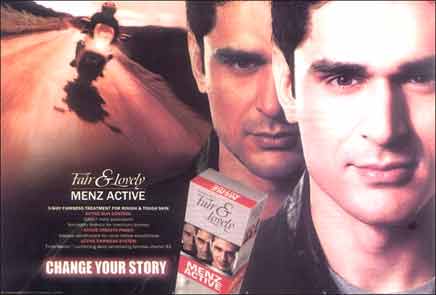
It would have created more impact if Menz Active used subtle message to promote this product. Given a choice, men prefer a macho and sexy product. If Gillette extends it to face creams, Menz Active will have tough time. Competition is already in the form of Garnier. Menz Active is positioned along the same line as FAL when it was launched. Menz uses the Statement “ Change Your Story”. The ad features a stuntman succeeding to become the model after using the brand. It is a typical “Before & After” kind of stuff. Rather than the message of “ using and then becoming successful” “successful and using the product” appeals more to men.

This is a segment that is worth watching. Will Menz Active Change the story?

Source : agencyfaqs,businessline,bbc website,estrategicmarketing,stylestation.typepad.com

Wednesday, August 30, 2006

Prestige Pressure Cookers : Long Way To Go

Brand : Prestige
Company: TTK Prestige
Agency: Mudra Communications


Brand Count : 119


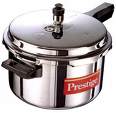
Prestige pioneered the pressure cooker market in India. Launched in 1950’s this brand has popularized pressure cooker as an essential cooking device.
When Prestige was launched, Indian consumers were somewhat afraid about using pressure cookers. The product category was looked upon by the consumers with suspicion and fear. Prestige changed all that. The brand using careful communication messages were able to establish itself as the safest cooker.

Prestige brand was able to address the initial concerns of the consumers like the nutrients getting destroyed using the cookers and more importantly the normal inertia in changing the way of cookers.

Long before the Product Demonstrations began to be popular among marketers, Prestige started highly successful house to house demonstrations to popularize the efficacy of this product category. These steps enabled the market to grow very fast. The pressure cooker market is estimated to be around 6mn pieces.

Not resting on laurels, Prestige was careful enough to innovate. In 1980, it came out with the first Pressure Pan which can cook a variety of Indian dishes. In 2003, to tap the premium segment, Prestige launched the Deluxe range of pressure cookers. The safety features like “Gasket Release System” and the “Gasket Offset Device” was invented by Prestige.Prestige also introduced a unique concept of separator cooking which means that two dishes can be cooked in the pressure cooker at the same time thus increasing the utility and reducing the fuel costs.

Later Prestige ventured into Non stick cookware category extending the brand. The company was leveraging the brand equity of Prestige to this new category. There also Prestige tried to provide freshness through innovation. It launched India’s first Metal friendly nonstick cookware range.

The reason for the brand extension is that the market for pressure cookers was not growing. The branded cookers faced lot of competition from unbranded cheap products. The unbranded cookers corner about 50% share in this market.
The pressure cooker market plus the nonstick market is worth around 600 crores, making it more sensible for the company to extend the brand.

In the early 2000 the company took the brand into a higher level by launching small kitchen appliances under the concept of Prestige Smart Kitchen. The small appliances along with cookers and nonstick is worth around Rs 3000 crores. Hence Prestige was hoping to cater to a larger market with its new range of Small appliances like Mixies, gas stoves grinders etc. The small appliance market although is large is crowded with small and large competitors and is tough to crack.

Although market reports suggest that Pressure Cooker market is almost stagnated, the figures show another picture. The penetration of Cookers in Indian households is as low as 36% and rural market penetration is only 18%.There is also a huge market for replacements. But the players are not able to break in to this market. It will take some marketing disruptor (new term from me) to break into the untapped market.

The major competitor for Prestige in Pressure cooker market is Hawkins. Launched in 1959, Hawkins is neck to neck with Prestige in market share estimated to be around 25%.

Hawkins in 1993 tried to break into the premium range of cookers by launching its Futura range of Pressure cookers. Although the design and the ads were catchy the price if Futura will give “Pressure “the Indian consumer. The price is around 200% more than the ordinary cookers. Hence Indian consumers have given thumbs down to this range. Futura has cornered a niche in the market but the growth is limited because of unreasonable price.
Although the early campaigns of Prestige brand has been able to create the brand equity, the share of voice of this brand still remains low. The brand does not remind you of any meaningful positioning except for the safety factor in Pressure cookers. If this brand has to transform itself to be a small appliances brand, it has to discover some core values of the brand and position the brand around it ( Which it has not done). For example, a regional brand “Preethy “which is a major player in the Mixie category is using a homemaker (model of course) to endorse the brand by using the tagline “ I guarantee” which can be extended to any product categories.
Prestige has to strategically position the brand inorder to use it as an Umbrella brand to endorse multiple categories
Source :Agencyfaqs, Bharathidasan Institute of mgmt website, indiatoday.com, magindia

Monday, August 28, 2006

Akai : The Original Price Warrior

Brand : Akai
Company: Videocon
Agency:SSC&B

Brand Count 118

Akai is the brand that changed the Indian CTV industry for ever.The 25000 crore Indian consumer durables market survived at one time because of Akai. Akai was brought to India by Baron International , a company floated by the young Kabir Mulchandani.

Akai was launched in India in 1995 and there after the CTV market was never the same. Before Akai, the CTV was a luxury affordable only to the middle class and above. The starting price of CTV at that time was Rs 15000 and above. It was a big task for a middle-income family to afford one at that time.

Players like Videocon, BPL, Philips and Onida dominated CTV market at that time. Akai had to break the stronghold of these players and how they did it is one of the greatest marketing success stories ever.
From 0 to14% market share within 18 months. That was the outcome. Akai did this by going by the advice of Don Corleone “ Make an offer that no one can refuse”.

“ Rs.9999 for a 21 inch color television” screamed full-page ads in newspapers. It was for the first time that a consumer durable marketer took full pages that too frequently. Along with the price, Akai invented the concept of exchange schemes into the Indian market and customers loved it. Nobody could believe the offer and the price. I don’t think anyone now also knew how it worked out.You go to the dealer with an old TV and you could get a discount of Rs 5000 on the new one. WOW…
Akai positioned itself as a price warrior and the heritage factor of being a Japanese company boosted the brand image of the company. The tag “Made in Japan” always impresses Indian consumers and it helped Akai to scale up in the market with in a short span of time.

Baron also took an unconventional distribution strategy by advertising heavily before the product hit the market. This created rush in the market and distributors paid upfront to get the orders and the company had the money before selling its product. The additional margins also satisfied the dealers.

The price and the hype affected the market share of the leaders in CTV market .All the players cut their prices as high as 40% so as to survive. This prompted customers to believe that they were being forced to pay a higher price before Akai came into the market. The price offers expanded the Indian CTV market like a rocket propeller

Akai ran into rough weathers shortly after 1998. Akai globally was owned by Ontario based Semi Tech corporation. Baron ‘s relationship with Semi Tech became rough. Baron, to tide over the probability of severing ties with Akai, forged a deal with Aiwa of Japan for marketing Hi Fi music systems.
Kabir Mulchandani did the same with Aiwa selling the brand at a price unheard of and making the product category reachable to middle class. But Aiwa as an upscale brand ( 51% of the co is owned by Sony) was not happy by this positioning ,however an the brand was looking for an upstart in the Indian market and Kabir’s strategy helped Aiwa to create a brand awareness and expand the market.

Akai thus severed its association with Baron and forged a marketing relationship with Videocon. Videocon was marketing the brands of Semitech like Sansui.

Akai struggled to shrug of the image of a low price brand which was strongly embedded in the mind of the Indian consumer. As Mr Abrahan Koshy of IIMA says ‘ Discounted brands are promotion dependant” so to survive Akai had to spend heavily on Advertisements and it was a difficult proposition.


Baron later tried its luck with another Chinese brand TCL but could not succeed. Once a poster boy in the media and once acclaimed as a marketing whiz kid, Kabir Mulchandani has faded in to history as a one product wonder. He is battling lot of legal issues and nobody talks about him now. But marketing history remembers him as a Disruptive Marketer who made two luxury product categories CTV and Hi-FI systems affordable to the Indian consumer.


Akai expanded the Indian CTV market which is now estimated to be 80 lakhs units per year. The Korean majors currently dominate the market. Since the launch of Akai in 1995, the entry-level models are ranging sub 10000, which was unthinkable in the 90’s. Now all the major players including SONY have a CTV model below Rs 10000. Even Flat TV starts in this range. All these, thanks to AKAI. But the brand has now become a marginal player in the Indian market. Videocon is finding it difficult to fit this brand into its already crowded product portfolio. Aiwa is fighting it out at the affordable TV and Music system category with the backing of SONY.

Source : agencyfaqs, estrategicmarketing,businessworld

Friday, August 25, 2006

Ambi Pur : Fragrance Your Imagination

Brand : AmbiPur
Company: Godrej Sara Lee


Brand Count : 117


Indian Air Care market is in its infancy. The market is estimated to be around Rs 50 crore. The market was earlier dominated by Odonil from Balsara ( Now Dabur) . Air purifiers/fresheners are not considered in the household purchases by the Indian consumer. The most common " air freshener" are the moth balls that can be seen in all the cub boards in Indian homes.
Odonil created the market for air fresheners. To a certain extent, it established its presence. Odonil is primarily used in Bathrooms.
Ambi-Pur was launched in 2002. The brand comes from the International stable of Sara lee and is the largest brand in the Household and Beauty care division of the company. Ambi Pur is the No.1 brand in Europe.
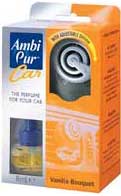
In India, Ambipur was launched as a air freshener for cars. It was a pleasant surprise for car owners to see a new product ( at that time) with somewhat a funny name. The brand gained popularity despite its premium pricing. Although the quality of fragrance is debatable, the product soon gained popularity among the car owners.
The product comes with a sweet little diffuser and the refill bottle. The diffuser can be plugged to the air vent or the blower. There are three fragrances available for Ambi Pur : Vanilla, Aqua and After Tobacco
Through the brand, Sara lee opened a new mass market for car perfumes. During that time, car perfumes were dominated by imported brands. The price of the diffuser and a bottle is Rs 130 and the refill costs you Rs 99.
The brand is positioned using the baseline " Fragrance Your Imagination". The company believes that perfumes relaxes the drivers and enhance comfort level. Since there is little competition, there is little promotion for this brand.
With the reasonable success of car fresheners, Ambipur extended itself to domestic room fresheners market this year. The market is now only room freshener aerosols and with the growing " Lifestyle" market in India holds lot of potential for this extension. The problem with this category is the lack of awareness , ease of use and the cost.The dispenser system of Ambi Pur may help overcome such problems.
Ambi Pur is a brand that identified a latent need in the Indian Market. The growing market for automobiles will give this brand a beautiful opportunity. Since competition is yet to catch up, the brand should try to expand the usage of this product by coming out with various fragrances. Company is having only one range of car purifiers. The market has the potential for multiple segments . For example there is a scope for a premium range of car perfumes . Hope that the company will take measure to increase the market.
Ambi Pur:Only factor missing is the imagination.
Source: godrejsaralee.com,businessline.com