Wednesday, January 17, 2024

Gerber Baby Cereal : Anything for little ones

 Brand: Gerber Cereals
Company: Gerber India ( Nestle)
Brand Analysis Count: #622

The market for toddler food in India is an astounding INR 2582 Bn ( $3.8Bn). The market is highly fragmented, regulated and dominated by home-made foods. A global brand Gerber entered the Indian market in 2022. Gerber has a very long and successful history. The brand was created in Fremont Michigan by Daniel Frank Gerber. The story is that Daniel's wife Dorothy suggested her recipe and asked her husband to manufacture it in scale so that mothers could save the struggle to make nutritious food for their kids at home. The product became hugely successful and as per wiki, the brand has more than 60% share in the US market. In 2007, the company was acquired by Nestle.


Indian cereal market although huge, is a challenging one. There is opportunity in the organized market owing to the sheer size of India's population. However, there are challenges in terms of retail exposure and brand awareness. However, since  Nestle has a huge and chequered presence in the Indian market and wide expertise in selling baby foods, things may be easy for the new brand.

Gerber is positioned as the segment's premium, high-quality innovative nutrition brand. The brand is targeting mothers and is taking the emotional route to impress the customer. The brand globally is pitching on the history of a product made by a mother. 


It is interesting to note that Gerber is launched as a new brand without any endorsement from Nestle. Despite being one of the most recognized corporate brands, Nestle has boldly decided to let Gerber create its own identity, which is usually a road less travelled in marketing. Building a new brand is a long-term play and I think Nestle is prepared for the long haul. 
Gerber's challenge is establishing credibility because it is dealing with a sensitive product. The legacy of 90 years of existence is highlighted in the advertisement which makes things easier for the brand. The product has come with interesting variants like spinach and carrot, mango and berry which can interest kids compared to other dull products existing in the market. 
Flavors are not a sustainable differentiation and if a flavour clicks, competition will follow suit in a blink of an eye. With Nestle's distribution and marketing muscle, Gerber is in a strong footing as a new entrant. 

Tuesday, January 09, 2024

Puro Salt : How far the brand can ride the purity proposition ?

 Brand: Puro Salt
Company: Puro Wellness Pvt Ltd
Brand Analysis Count: # 621

Puro is a relatively new entrant into the Indian salt market. Indian salt market is a huge size of around INR 27Bn. India is also the world's third-largest producer of salt. The Indian salt market is dominated by Tata Salt with a market share of around 17%.

In a commodities market with very low entry and exit barriers, it would be tough for a new entrant to survive. But a company named Puro Wellness is trying its luck through its brand Puro. Puro Wellness was established in 2016 and its first product is salt. The company has tried to use the " Pure" proposition to create a space for Puro brand of salt. Pure is a well-used marketing proposition and is used extensively across various product categories. This strategy is especially used when the category is predominantly a commodity. In spices, sugar, pulses etc we have seen this strategy being used extensively.

I also remember the efforts of Parrys Sugar taking the same purity platform to create a space in the sugar market. So from a marketing strategy perspective, there is nothing new about what Puro is doing in the Indian market but the way it is executing the strategy is interesting. The brand uses a comparative advertising format not against a specific competitor but rather against the category of white salt. Pure salt is pink salt and is cleverly trying to break away from the white salt category and create a new category ( not exactly new but owning) of pink salt. The brand is saying that pink salt is better than white salt because it does not use bleach to get that white colour. The company has used celebrities such as Anil Kapoor and Keerthi Suresh to bring authenticity to the claim. If it clicks, there is a chance that many customers will switch to pink salt perceiving it to be pure. 

This has rang alarm bells in the competitors and the market leader has gone to court challenging the claim of Puro but the court did not provide any relief to the complainant. 

The company also started launching another product turmeric under the Puro brand name with the same promise of purity. The brand has the name advantage that links directly with the purity positioning. Puro salt is priced at very premium compared to ordinary salt. 

While Puro has been heavily investing in promotions, the problem with the purity proposition is that it is very difficult to own that brand proposition. If Tata Salt or any other competitor launches pink salt and calls it pure, there is nothing one can do. So here the top of the mind-share becomes the critical determinant of success which is a cash-burning strategy. On the other hand, what else a brand can do to break into a commodity market ?

Sunday, August 20, 2023

Epson India : Can Rashmika boost Epson's Brand Image

 Brand : Epson

Company : Epson India

Brand Analysis Count : #620 


In June 2023, Epson, which is world's leading computer peripherals and electronics company, roped in the popular actress Rashmika Mandana as its brand ambassador. Rashmika who is very popular among the young generation will be endorsing Epson's Eco Tank range of printers. 


Epson came to India in 1990 with its dot-matrix range of printers which became very successful.Later the company brought its inkject printers, projectors, bill printers into the Indian market with much success. As per news reports, the company is now doing business worth 2200 crores in India. 

Epson is a Japanese brand which is owned by the famous Sieko Corporation which is known for watches. Infact the name Epson came from the terms " Son of Electronic Printers". Epson's core competency is its innovation and has many firsts in bringing breakthrough products in the printing domain. 

One such recent innovation is the Eco Tank inject printers which uses ink tanks rather than cartridges. Having used inkject before, I found it to be less efficient and cartridges often cannot be refilled. Ink tanks are convenient and has more capacity than the cartridges. The product is also a result of the brand's focus on sustainability. 

To promote this breakthrough innovation, the company chose Rashmika Mandana as the endorser, the current campaign is on air. 


The brand calls this a revolution in technology which it is. The interesting marketing angle is the use  of a celebrity in promoting a printer which is more of a rational product which has no glamor attached to it. However, the presence of the celebrity brings stickiness to the advertisement and also helps authenticate the claims. Here Rashmi Mandana takes the role of a sustainability advocate rather than a technology expert. 
Epson's focus on technology innovation and its focus on sustainable solutions is going to have an impact on the brand image among the customers. 

Saturday, April 29, 2023

Brand Update : SS Music transformation into digital

 I wrote about SS music in 2006 when the viral music channel lost its sheen. Last day, a comment prompted me to look into this brand. This channel may have been dead for long. But surprise, the brand is not dead but has evolved into a digital medium.

It is nice to know that the brand has created a new life in the digital space. It has a vibrant youtube channel. As written in my post on SS Music, the channel had accidental success as a music channel. The channel's aim was to start to broadcast lottery results, and between the results, they played music. However, because of the VJs, the channel became a music channel and even was considered South India's MTV.

The new avatar is not a music channel but rather an entertainment channel with interviews, reviews and snippets. It is good to see such an adaptation to new technologies and the transformation of a channel to cater to the new generation. 

Read my 2006 post on SS Music here

Friday, March 24, 2023

Pentonic Pens : Write the Future

Brand : Pentonic Pens
Company: Linc Pens
Brand Analysis Count: #619


Indian writing instrument industry is worth Rs 4000 crores and is characterized by competition from organized and unorganized players. Since there are no entry barriers, many brands are vying for market share. The market is price sensitive at the bottom, while premium pens are often considered accessories and dominated by global brands. 
Linc Pens is a strong player in this market. During 2020-21, the company felt that the growth was stagnating and required a boost in terms of a new product. The management wanted a product perceived as different from the rest, and Pentonic brand was born. The company designed the brand to be different through the form factor. The colour was black, and the pen was long and stylish. 
The major segments that use pens are the college and school-going students characterised by price sensitivity and weak brand consciousness. However, an interesting consumer behaviour element was that these consumers were careful while selecting pens for exams. There they could prefer a trusted brand. It was this segment that was attracted to the Pentonic brand. Since Linc was already established, stores' distribution and product placement was not an issue. The brand immediately took off and is now a bestselling brand in the Linc product portfolio. 

Although the brand's differentiation was black colour, the company expanded the portfolio by launching a sub-brand, Pentonic Frost. The brand's visibility at the retail store was also enhanced by the rotating dispenser, which was very visible and quickly caught the consumer's attention.
To further reinforce the brand's attractiveness towards the exam goers, the brand also ran a campaign called the exam goers exam warriors, again well received by the market.  


The writing instrument market is such that every design will be matched by the competitors unless protected; in no time, these pen designs are copied by the competitors, and the same happens with Pentonic. However, the brand made strong brand awareness in the Indian market, and ultimately brand strength matters most in this market. 
Pentonic story gives us the brand lesson on the importance of design as a key differentiator in a cluttered market. The design focus is slowly catching up in the Indian marketing scene, and consumers are to benefit the future through these well-designed products. 

Wednesday, December 07, 2022

Brand Update : Quaker Oats wants to make breakfast unskippable

 In a very thoughtful move, Quaker oats have launched a series of advertisements advising customers not to skip their breakfast. Drawing from consumer insights that in this era of busy life, consumers, especially young consumers, often skip their breakfasts which can, in the long run, become problematic for their health and energy. 

Brands like Kellogg's and Quaker have long been trying to get consumer preference towards their products, replacing traditional breakfasts. The success has been limited. In the new campaign, the brand is again appealing to the convenience factor of its product. 

The product in question is the Quaker Oats Muesli which is a ready-to-eat cereal. The product boasts five grains and comes in two flavors - fruit and nut and berries and seeds. However, the major selling point is the convenience of quick preparation and balanced meal. 

One should appreciate the brands like Quaker and Kelloggs for being tenacious and open to experimenting with product variants. The new campaign will help the brand gain more traction in the breakfast space, which is witnessing a change of sorts. 


Tuesday, October 25, 2022

Brand Update : Snuggy invents SuSu Meter

 In an interesting move, baby diaper brand Snuggy introduced a feature called Susu meter which is a blue strip that tells mothers that it is time to change their baby's diapers. The feature comes as a result of the customer insight that it is worrisome for mothers to check frequently whether the diaper is wet and needs change. The brand is solving the problem through a yellow strip on the diaper which turns blue indicating the diaper needs change.

Snuggy was the pioneer in the baby diaper market in India. The brand changed hands from the founder R Mohan to Godrej consumer products to Noble Hygiene. The change of brand owners resulted in the brand losing its share in the market from a market pioneer to a laggard. The new brand owner is trying to revive the once-market leader. 

Many brands have used this technique to tell the customer to replace the product. Oral B had used a color fading strip in the toothbrush and Gillette had it in their shaving blades. The concept comes under the broader strategy called  Planned Obsolescence. Planned obsolescence is the strategy where the brand is designed in such a way that it becomes obsolete after a limited time. Many brands like Apple and Intel make their products obsolete by launching new versions even when the older versions are selling well. 

However, the Susu meter is a toned-down version of planned obsolescence and is helpful for mothers. The brand is running a campaign highlighting the feature in the Southern part of India. From being a laggard, Snuggy needs a clutter-breaking feature like this to regain the lost mindshare as well as the market share. The brand has succeeded in breaking the clutter for sure. 


Friday, September 30, 2022

Love Depot : The Pleasure is all yours!

 Brand: Love Depot
Company: TTK Healthcare

Brand Analysis Count: #618


This has to happen one day in India! India now has a homegrown pleasure product store in the form of an online store. TTK Healthcare has launched Love Depot which is an online store selling pleasure products  ( Sex toys to be precise). The changing consumer landscape, preferences, and cultural changes have brought about new opportunities for marketers. 

The Indian sexual wellness market is estimated to be around $1153 million growing at a CAGR of around 6%. Currently, there is no organized player in this market. The pleasure product market will be an interesting case study for marketing enthusiasts because of the nature of the market and the taboo attached to the products, especially sex toys. For TTK Healthcare, it would be a repeat of the efforts they had to make for making the condoms category popular among Indian consumers. 
There is no doubt that there is a huge market for such products in such a populous country. But the way of the Indian culture is that we are not very open to such products on the outside. Sex is seldom discussed in the open but all of us know the reality. 
Love Depot is trying to fill in a gap that I think can result in a gold mine of opportunities for the company to make money. It all depends on how well the company is able to break through the taboo.
TTK is marketing the new D2C initiative through digital platforms. The launch of Love Depot was through a digital-only campaign in line with the brand's promise of private pleasure. 
One of the major factors that will inhibit a consumer from trying out such products is privacy or in plain language - fear of getting caught while receiving the product. TTK is handling that issue by promising discreet packaging and even the option of self-pickup. However, it will take some time before the consumers trust the promise of discreet delivery. With the society getting more open to these categories, Love Depot will have the first mover advantage. 

Thursday, June 30, 2022

Does brand's gender matter/ Brand Name Linguistics


Research says that how your brand's name is perceived as female/male will have an influence on brand attitude and performance.

Friday, May 27, 2022

Little Trees : Differentiation by Trade Dress

 Brand: Little Trees
Company: Car Freshner Corporation
Brand Analysis Count: #617

Little Trees was a brand I happened to purchase quite accidentally. I happened to browse through my usual online grocery app and saw this brand of car fresheners. I have seen this car freshener earlier and thought of checking it out. Then I found that it is " Made in USA". That hooked me and I bought the product. Again one more anecdotal example to prove the existing research findings that country of origin has a significant influence on brand preference and purchase intention. 

Research on this brand threw a lot of interesting stories about the brand. The brand is from New York USA and was created by Julius Samann. Samman was a chemist and he created this product in 1952 to solve a problem faced by his friend who is a milkman. His friend was bothered by the smell of spilt milk on his truck. Samman took on solving this problem and he extracted aroma from pine trees and designed a freshener in the shape of a pine tree with a string attached to it which can be used to dangle the freshener onto the car's rear-view windscreen mirror. He applied for a patent for this unique product. 
The product was a success in the market and later the company followed it up with a lot of related product extensions. 
There are a lot of lessons that can be learned from this brand. The most interesting lesson is with regard to product design which is the most powerful brand element of Little Trees. The product is designed in the abstract form of a pine tree which differentiates itself from the rest of the car freshener brands. The strategy of using the visual appearance of the product or packaging to signify the source of the product is known as Trade Dress. Another example is the coca-cola bottle. Trade Dress comes under the protection of intellectual property rights which makes this a powerful differentiator. 
Another lesson is that the very nature of the product design where the car freshener visibly dangles in front of the car gives this brand immediate promotion. Another factor is that this product is priced very reasonably given its rich branding history. 

Indian car freshener market is worth around Rs 250 crores and looking at the growth of the automobile market, the potential is there for many such brands. Recently the government has allowed the import of non-burning fresheners in India which may have opened the doors for these brands into the Indian market.

Tuesday, May 10, 2022

Brand Update : Jaquar self trolls for its brand extension

 Jaquar which is one of the premium bath fittings brands has extended itself to lighting products and in an interesting move, the brand self-trolls for this move. The brand had ventured into light fittings as early as 2018  and is now very vocal during the latest IPL season with some clutter-breaking ads.

The latest ad is interesting because the brand very much highlights the consumer dilemma when they encounter brand extensions. When consumers hear about Jaquar, the products that come to their mind are bath fittings and then the brand extension of lightings. Having said that marketing academicians are in two groups as far as brand extensions are concerned. There are contradicting research and real market evidence of brand extensions' success and failures. The driving force behind the decision is the savings on the cost of building a new brand. 

Jaquar needs to be appreciated for making fun of itself and through this campaign, the brand has made its communication clear and sticky.

Sunday, May 01, 2022

Brand Update : Colgate targets diabetics with an ayurvedic variant

 In a smart and interesting move, Colgate has launched a variant for diabetic patients - Colgate Diabetics. Actually, the brand name runs long like - Colgate Toothpaste for the oral health of Diabetics. The somewhat interesting name is to prevent any legal issues arising out of the product. The launch is a natural extension of the brand to capture a largely untapped market in the oral health space- diabetic patients. India is considered a diabetic capital of the world with a large incidence of this lifestyle condition.


According to the brand's press release, oral issues such as gum decay, and tooth decay are prevalent in diabetic patients and as the leader in the oral care market, Colgate aims to cater to the needs of this large segment with a variant. Another reason is the possibility of entrants into this segment and Colgate doesn't want to concede a market as it once faced such an issue with GSK's Sensodyne. Another interesting fact is that Colgate chose to go the ayurvedic route as a solution to this issue. It seems that the brand is predicting a shift from the consumers toward natural products. For promotion, the brand chose the celebrity route through the famous Indian cricketer R. Ashwin. In fact, the brand has hit a bullseye with a testimonial theme from Ashwin and his father. It is very difficult to get such a combination. 

Colgate has been very proactive in launching new products and also promoting the brand to ward off the threat from the competition. The current launch is such an example of
the market leader.


Friday, April 08, 2022

Atomberg : Why Not?

 Corporate Brand: Atomberg

Brand Analysis Count: # 616

Atomberg is a relatively new brand in the highly competitive consumer durable market in India. The company was started by two IIT Bombay Alumnus who had a passion  to creative high quality innovative products for India. The first product was in the fan category launched in 2015. The brand has come a long way since then creating a space for itself in the fan category.

Atomberg is competing for share in the Rs 10,000 crore fan market in India. The brand is pitching for the premium fan segment accounting for about 15% of the total market but the silver lining is that this segment is growing very fast.Atomberg has also recently diversified into other small appliances category like mixer grinders. 

The marketing of a consumer durable brand is a tough task because the nature of the product demand developing a USP and sense of trust among the consumers. The consumer durable market is crowded with large powerful national and international brands at the top and numerous small regional brands at the bottom. Further, these product require service support across the market which is not an easy task to achieve.

Atomberg has decided to play it in the premium segment because the best way to build a brand which will endorse a range of products is to create an aspirational flavor although there are lot of risks in that strategy. The rist is to justify the premium that these products command. Atomberg has chosen the platform of innovativeness as the USP for the brand. In the fan segment, the brand has positioned on the "power-saving" benefit for the consumer through the BLDC (Brushless DC Motor) technology.

The brand is currently running a major campaign for the fans featuring two kids Atom & Berg. The premise for the ads is the corporate brand's tagline  - Why Not ? which is a good representation of the brand's focus on innovativeness. 

There is  not a large number of advertisements that feature kids as the protagonists for brands which are not essentially kid's products. Kids are now seen recommending products like toothpastes to even life insurance. I am not sure what is prompting ad makers to believe that kids are the best people to recommend the products. Same is followed for Atomberg campaign. They have used kids are the representative of the brands. I personally feel that kids reduce the seriousness of what the brands has to say except for the brands that has kids as consumers. 

Here also the brand may have to continue these characters across various new product launches if they are to maintain continuity of the message since this is an umbrella brand for multiple product launches. The only advantage of using kids in ads is that some may view the ads as cute. 

Atomberg has chosen to  build itself around the idea of innovativenes. The challenge is to demonstrate that innovativeness in the products.The brand has been aggressively promoting across various media and this has definitely an impact on brand awareness and likely brand trials. 

Tuesday, March 29, 2022

Brand Update : Domex changes positioning focus to fragrance

In their new campaign, HUL owned Domex has changed the brand's long-standing focus from germ-killing to fragrance. Prompted by competitor's pitch on foul-smelling bathrooms as a customer's problem area, Domex has decided to add fragrance to its benefits which in a way is moving away from the earlier positioning of germ-killing toilet cleaner. It is not a big deal since brands try to offer a bundle of benefits to the consumer. But what I have found interesting is Domex's way of communicating the new benefit to the consumer.

In the new campaign, the brand features the famous actress Revathy as the protagonist. The brand has a new tagline - Don't Argue, Just Domex. 


 The brand has done well in reacting fast to the competitor's pitch on good-smelling bathrooms and has quickly achieved points of parity with the competing brands. However, I feel that Domex is a bit overbearing on the consumer in the latest ad. If you look at the brand's advertisement, the brand represented by Revathy is just bulldozing the consumer by saying Don't Argue, Just Domex which has left me in a bad taste. The way the celebrity is cutting off the consumer and forcefully enforcing the brand is also a reflection of the brand's personality whether intended or not. I know I am reading too much into the ad but it is my perception of the brand's arrogance. 

Domex has been very aggressive in recent times. The last campaign was a direct attack on Harpic which was later challenged by Harpic and the ads were taken down. My opinion is that a brand's arrogance should be directed towards the competitors and not at consumers. Consumers have the right to argue and not just Domex !!!


Monday, February 14, 2022

Lessons from Kashmir Day Twitter Controversy for Marketers


On February 2022, brands like Hyundai, Kia, Dominos landed up in trouble over some tweets from Pakistan over Kashmir. There are lessons to be learned from this controversy.

Monday, January 10, 2022

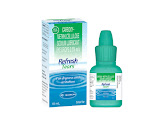
Refresh Tears : Golden Years Ahead

 Brand: Refresh Tears
Company: Allergan India ( ABBVie )
Brand Analysis Count: #615

Indian Pharmaceutical industry is huge in size estimated to be around $42 Billion. One of the major growth areas in this industry is the OTC ( over the counter) products which can be bought without a prescription. This OTC rush has even created a new category called FMHG - Fast Moving Health Goods.

OTC ophthalmic products is another emerging area in this industry and one of the major brands in the market is Refresh Tears. Those who are using computers for a long time may have never missed this brand which is used as a relief to mild dryness in the eyes. The dry eye strain market is estimated to be around Rs 400 crore and Refresh Tears is a prominent player in the market. Although an OTC product, this product is rarely advertised and often the first purchase is through a doctor prescription. 

With the incident of eye-strain is rampant with the heavy use of mobile and laptops, a whole lot of eye care products have entered the market and most of them are natural/ayurvedic in nature. The market is expected to grow manyfold because digital device usage is only going to grow. So then why is the brand owner is restraining from heavy advertising? One reason I can think of is the role that influencer play in this market. Allergan is a company that plays an important role in the ophthalmology space and usually, a consumer will have the first encounter with the brand through the doctor. 

In my observation, usually, doctors tend to avoid prescribing OTC brands once they are heavily advertised. I have seen this in the case of cough syrups. Now Refresh Tears is sold at a premium of rs 150 and when the doctor prescribes it, the patient will have to buy irrespective of the MRP. In the OTC that is not the case. Once the consumer starts using these brands, then the continuous purchase is done without prescription. So this is a dilemma that many pharma companies face when they put a product under the OTC category. For now, I think the brand owners are happy with the way Refresh Tears are fairing and probably comfortable with the margin too. Another reason is the nature of the product. Eyes are so precious that consumers may ask the opinion of the doctor before going for self-medication.

This brand is in a category that will see huge growth because of the evolving consumer behaviour and digitization and Refresh Tears is all poised to reap the benefit of this natural growth. 

Tuesday, December 28, 2021

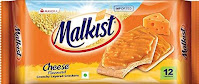
Malkist : Can't Resist

Brand: Malkist
Company: Inbisco
Brand Analysis Count: #614

The Indian biscuit market is estimated to be around Rs 37000 crore and is characterized by high penetration and intense competition. The market has all the major brands vying for a share but is dominated by Brittania and Parle. This is also one market that stood its ground even in the Covid-19 pandemic. 

In 2021, a new brand entered the market by the name Malkist which is from Inbisco which is a subsidiary of Indonesia based Mayora group. Inbisco is well known for its confectionery brand Kopiko which has carved a niche for itself in the confectionery market. Malkist is a brand from Indonesia from  Mayora's portfolio.

Malkist is not an ordinary biscuit. It is in the sub-category of crackers which is a biscuit usually preferred by adults who are diabetic or health conscious. Usually, crackers are taken with added toppings to make them consumable. This is where the brand has identified an opportunity. Malkist wants to redefine the cracker category in favour of the larger set of young consumers by making it different and palette friendly. 

Malkist has done this by adding flavours to it. It is a 7 layered crackers that come in flavours such as cheese and chocolate. The brand which was soft-launched a year back is now launched nationally. The brand has also given a big boost to the launch campaign by getting none other than Amitabh Bachchan. Bachchan has brand pull across demographics and getting him to promote the brand was a big plus for Malkist.

The launch campaign featuring Big B is also a delight to watch and the ad makes use of Big B to the fullest. The theme is " can't resist" is one of the most used themes in the food-related ads, but the ad is never boring thanks to the presence of Big B. What is good about the ad is that it persuades the customer for product-trial which is the primary and paramount objective for any new brand in the market. The rest of the success depends on how the product performs. 

Malkist is positioned as a premium cracker and is now pushing the brand solely on the taste factor which cannot be termed as a clear differentiator. However crackers with irresistible taste is a nice value proposition to have at least at the launch phase. The brand will be looking at bringing more flavours to the portfolio in the coming months thus catering to the variety-seeking needs of the target market. The brand is also an example of a competitive strategy of niche marketing where the company aims at carving a niche in a highly crowded market away from the competitors.

Friday, November 05, 2021

Aquaguard: Paani Ka Doctor

 Brand: Aquaguard
Company: Eureka Forbes
Brand Analysis Count: 613

Launched in 1984, Aquaguard was one of the pioneers in the water purifier market in India. The brand from Eureka Forbes created and led the water purifier market for more than three decades now. Aquaguard was launched after the success of the vacuum cleaner products from Eureka Forbes. The company used the direct selling model to sell the water purifier also. Like any pioneer, Eureka Forbes had to do the hard work in convincing the market, the need for a water purifier at home. 

Slowly the market warmed up to the category and the growing awareness of water pollution and the need for better drinking water accelerated the adoption of this product especially in the middle class. When the market grows so does the competition. Aquaguard got a worthy competition in Kent. Kent approached the market in a different way by launching a premium water purifier with an advanced technology called Reverse Osmosis (RO). 
Through heavy advertisement campaigns featuring Hema Malini, the brand quickly gained traction and virtually owned the RO water purifier product line. Kent successfully communicated its claim that RO purifiers are better than the ones marketed by Aquaguard. Despite being the market leader, Aquaguard struggled to counter Kent's RO based marketing push.
Over a period of time, Aquaguard launched its own range of RO purifiers. One of the chunks in the brand's armour was the advertisement support for Aquaguard. Kent was heavily promoted and the communication was consistent and targeted. While Eureka Forbes was not that aggressive on the promotional front. 
Later the brand wake up from lethargy and followed the celebrity endorsement strategy of Kent by roping in Madhuri Dixit. Aquaguard is positioned as an expert in the water purifier domain communicated through the tagline " Paani ka Doctor" meaning - Doctor for Water. The water purifier portfolio has three extensions - Aquasure which is aimed at the lower-priced segment, Aquaguard which caters to the bulk of the market and Dr Aquaguard aimed at the premium consumers. 
While Aquaguard initially was following a catchup strategy with Kent in terms of technology perception, the brand took an aggressive stand in recent years. The brand launched variants with advanced technology and features such as Aquaguard Ayurfresh that gives taste and aroma to the water through a herb diffuser. Another launch was the copper and stainless steel variants taking the features ( augmentations) to the next level.
Recently the brand launched a veiled attack on Kent RO purifiers in the campaign for the Aquaguard active copper variant. The market leader claims that RO has become an outdated technology and the new technology is the active copper feature. The move is a smart one but a tough call. Kent has spent a huge amount of resources to convince the customer that RO technology is a superior version. Aquaguard may have to match that share of voice to claim technology superiority over the rival. It needs to be seen how Kent will react to this move by Aquaguard. 

Thursday, October 21, 2021

Brand Update : Prestige takes Svachh idea to gas stoves

 It is always good to see how brands leverage good ideas and use them as a platform for product innovation. Prestige had struck a smart idea of Svachh ( clean) products probably inspired from the highly lauded Svachh Bharat Abhiyan. The first product was the Svachh pressure cooker which had a deep lid with spillage control that prevents froth from flowing down the cooker. Although I was sceptical, I found the cooker very useful at home. Spillage is a common problem is a pain point in the kitchen. 


The brand has not extended the idea to gas stoves with the invention of Svachh gas stoves where the burners can be lifted so that the entire stove platform can be cleaned. It is a simple idea but very useful especially since homemakers are often troubled by unclean gas stoves. I guess that Prestige will be looking to expand the ideas to multiple products under its umbrella. 

These small ideas are incremental, simple but make sense for the consumer. Although these ideas can be replicated by the competitors, Prestige now has the image of being a very innovative and thoughtful marketer. Vidya Balan as the brand ambassador brings more authenticity to the brand campaigns. The brand is well poised to harness the power of little ideas. 

Related Post

Tuesday, October 05, 2021

Brand Update : Cadbury Dairy Milk and Nostalgia Advertising

 Recently Cadbury Dairy Milk did the unthinkable; it recreated the iconic advertisement of the girl dancing during a cricket match with a twist. The marketing and advertising community was thrilled to see the recreated ad and the creative prowess of the agency O&M.

The ad evoked a lot of nostalgia among the consumers who not only liked the chocolate but also enjoyed the brand's advertisements. Nostalgia is defined by marketing academicians as a preference for objects that were common when one was younger. Marketers use nostalgia both in products as well as communications. Recently Mahindra brought back the Jawa brand as an example of nostalgia-based product development and launch. Nostalgia is also used in brand communication in different forms. It can be in the form of themes, music, imagery etc. Parachute Advanced used an old Hindi song in their campaign evoking old memories, some brands bring back the old jingles, taglines evoking nostalgia among the consumers. Research has indicated that consumers have a preference over products that are more aesthetic in nature which has strong associations with their youthful days. Another set of researchers have found that there is an increased tendency of spreading the brand through word of mouth. 
The recreated Dairy Milk ad is a brilliant move by the brand rekindling the interest and love for the brand. The ad also strikes a chord with the new generation because it ticks all the right boxes in terms of gender equality and empowerment. More than that this is yet another brilliant example of brand storytelling. 

Wednesday, September 01, 2021

Brand Update: Cadbury 5Star takes forward the Do Nothing Theme with new Ad

 Cadbury 5Star seems to have hit a jackpot theme - Eat 5 Star, Do Nothing. The brand has launched a new campaign extending the theme in a new situation. And just like the last one, the ad is funny and not boring. To find a campaign theme that can be used as a platform for multiple ad campaigns is a priceless moment for marketers. It gives the much-needed juice for consistent marketing campaigns without boring the viewers. I think that 5Star got such a platform. Kudos to the campaign team.