Friday, November 13, 2020

Brand Update : Ceat Urges You Not To Be A Dummy

 Ceat tyres is one of the most visible brands during IPL 2020. As the main sponsor and through a very clutter-breaking campaign featuring Aamir Khan, the brand, in my opinion, reaped a lot of eyeballs during this IPL season.

Other than the fact that IPL, especially during this pandemic, was a welcome relief to a lot of viewers in terms of entertainment value, Ceat was successful in milking the investment of being a main sponsor through a very clever campaign featuring Aamir Khan. Usually, when you are onboarding a celebrity of the calibre of Aamir Khan, the challenge is to use his persona effectively, reduce the chance of eclipsing the brand in the campaign and make the ad interesting. Ceat was successful in all these counts.

The IPL campaign was for SecuraDrive sub-brand of tyres and the focus was on safety. Over these years, Ceat was trying to own the platform of secure driving for its range of tyres. This campaign also is in the same line. The choice of the brand name SecuraDrive also conveys the brand's intended purpose. 

What makes the campaign interesting is how the celebrity was treated in the ad. Here Aamir is a car crash test dummy which in itself is a novel idea. The fact that this dummy is afraid of his life is another twist. This campaign is also a classic example of anthropomorphism in advertising. The concept of giving human-like characteristics to non-human entities is called anthropomorphism. The two campaign is spot on in conveying the brand's message to the viewers.  Good Job. 


Tuesday, November 10, 2020

Brand Update : Pond's Brings Back" Googly Woogly Wooksh" Jingle

 In the run-up to the winter season, Pond's has brought back its famous jingle ' Googly Woogly Wooksh" in an emotional pitch featuring a grandfather ailing from memory loss and his beloved granddaughter. The ad touches upon an emotional chord in the viewer at the same time cleverly delivers the core message of the brand in a beautiful way. Pond's always communicated its value proposition of " smooth skin". 

The popular jingle " Googly Woogly Woosh" was first launched in 2009 campaign was the brand's way of communicating the brand's value proposition of soft skin. The brand used the campaign in multiple ways using celebrities and the like. Later, Pond's began aggressive extensions and no longer the brand was focusing on just cold-creams and skin related products. At one time Pond's even launched men's personal care products.  This probably made the jingle out place in the brand's campaigns. I would even say that Pond's was a kind of under-promoted by HUL in the last few years compared to other brands from the company's portfolio. 
The new campaign is well executed and again reminds marketers not to discard their proven brand elements just for the sake of change. 
Related Brand Post

Sunday, November 08, 2020

Brand Update : TVS Apache reaps the benefit of racer sharp focus

 This October, Apache which is the indigenous performance bike from TVS reached a milestone of 40 lakh sales. Although this figure may be dwarfed by the sales of the likes of Bajaj which sells more than 1 lakh bikes a month while Hero sells around 3-4 lakhs two-wheelers in a month. However, as a student of marketing, the story of Apache is of persistence and continuous improvement that made this performance bike reach such a good sales milestone. 

Launched in 2006, the brand had a good start with its launch of 150 cc bike but later dwarfed by the competition which created multiple segments and dominated those segments in the higher cc performance bike market. In the game of volume sales, it is often easy to get deluded by the race for volume which has seen a lot of good brands biting the dust, TVS kept its patience and incrementally upgraded this brand with new variants and performance improvements. More importantly in the branding perspective, Apache kept its focus on the Racing DNA which forms that backbone of its promotions. The brand took a giant leap when it entered the 250-350 cc segment in 2017 with its RR 310. The tie-up with BMW helped with a refresh on the brand's pitching as a performance-oriented bike. 

In my personal opinion, one of the factors that inhibited the brand's large scale user adoption was the style. The brand had a particular stance which was either liked or hated. With the brand offering no variety in styling, the brand limited its sales to hard-core fans. In the new avatar, Apache comes with different variants, the brand began to appeal to a broader set of consumers. In a way, Apache had missed the bus in the premium performance bikes but the slew of launches in the recent years are helping Apache to break into the performance segment. 

Thursday, November 05, 2020

Brand Update : Kent transforms to a multi-product brand

 Kent or rather Kent RO System is known for its RO based water purifiers but not anymore. From 2016 onwards, the brand has been on its way to becoming a consumer durable brand. Slowly and steadily, the brand has been launching products in the small appliances category leveraging on the success of its water purifier product range. Kent RO based water purifier was launched in 1999 challenging the UV based water purifier products which were ruling the market. Although expensive compared to UV based purifiers, RO based purifiers slowly gained acceptance due to its superior purifying ability and also backed by powerful promotions from the brand owners.

Now Kent has a number of product lines which are very diverse. The product line consists of water purifiers, vacuum cleaners, air purifiers, water softeners, kitchen appliances, security camera systems, and attendance systems. Kent brand is built on the positioning platform of purity. The founder of the company, Mr Mahesh Gupta calls the company's core as House of Purity. While the initial launches were in line with the " House of Purity" platform, later the firm began to launch unrelated extensions like a security camera and niche small appliances. 

Mr Mahesh Gupta in an interview talks about the logic of concentrating on niche product categories. One advantage of niche is that there is not much competition. The niche products also will help Kent to display its innovative side to the consumers. If the brand is able to come out with innovative products, it will enhance the brand image and thus help brand launch mainstream products in the future. 

As with all brand extensions, Kent also faces the problem of equity stretch. When a brand launches its extensions, the new products rely heavily on the parent brand's equity. Unrelated products create a lot of pressure on the core brand equity because there will be a disconnect between the core brand's positioning and the unrelated product's positioning. The solution is to identify a core brand positioning which allows for multiple brand extensions across diverse categories. For example, House of Purity positioning of Kent may not support a product like a mixer grinder of a camera security systems. 

Tuesday, November 03, 2020

Hygienix : Be Super Safe

 Brand: Hygienix
Company: Wipro Consumer Care

Brand Analysis Count: #598

When the coronavirus pandemic struck India this year, during the initial days, there was a huge scarcity of sanitizers in the market. The sanitizer category was nascent at that time with only a few players like Lifebuoy and Godrej Protekt and the product stocks were minimum in the stores. The market size at that time was around Rs 10 crore. The scenario changed drastically after March with the panic over the pandemic grew, so as the demand for products like sanitizers. The market grew four times during the pandemic with around 152 manufacturers producing the product. 

There was a scramble among firms to cash in on this new opportunity. Firms across industries as varied as paints, industrial manufacturers like paint thinners, SMEs all rushed to fill the gap in the market. Not to be left behind, FMCG firms either launched product extensions or new brands into the growing market of personal hygiene fuelled by the pandemic.  One such launch is the new brand Hygienix by Wipro Consumer Care. Wipro had powerful brands like Santoor, Chandrika, Yardley etc which had their own extensions of hygiene products like sanitizers.

Along with these extensions, the company found a space for a pure hygiene brand which can compete with brands like Dettol and Savlon. The brands like Santoor and Chandrika are primarily beauty products and it is risky to stretch the positioning to hygiene.
Hygienix is a brand acquired by Wipro when it bought Philippine's firm Splash Corporation in April 2019. I think Wipro is lucky in the sense that the timing of the purchase was spot on and the pandemic gave the brand a headstart in the market. 
Hygienix is launched with the obvious brand promise of germ protection. The brand as usual promises to kill all but the lone survivor of the germs. What is striking about the brand is the white and blue brand colours in the packaging which gives it a clean mild look. Hygienix launched a range of hygiene products like sanitizers, soaps, handwash, cleaning wipes etc. The brand name also gives the company leverage to launch further hygiene-related products in future. 
Established brands like Lifebuoy, Dettol and Savlon have one more competitor to live with. 


Friday, October 30, 2020

Brand Update : Colgate Launches Mouth Protection Spray Under Vedsakti Brand

 When consumers are scared, take advantage of the opportunity and offer to help. In this era of COVID-19 where consumers are scared as hell, many opportunities have popped up in the market in the form of health protection. From hand sanitizers to paints, brands are trying to cash in on the opportunity to take advantage of the opportunity to reassure the consumers' health concerns. This is the market which has products like paints, laminated plywood boards and even electric bulbs promising to kill the deadly bacteria and virus with a condition that 0.01 of the germs will be left behind to protect that species. After all, these are the gods' creations. 

In that scenario, how can a toothpaste brand be left behind? Everyone knows that the virus has its entry point through either mouth or nose in most cases. Since the mouth is the domain of the toothpaste, they too have jumped into the bandwagon of saving humanity from the deadly virus. How? Launching of a new product - mouth protection spray. The market leader Colgate has grabbed the first-mover advantage by launching a spray that kills the germs ( sans the 0.01 lone survivor ) at the entry point itself. Mouth sprays have existed in the market but for a different functionality- fresh breath. So although the launch is not an entirely new category creation, the brand is pioneering a new functionality to the mouth spray product-line. I predict that it will not be too long for Close-up brand to launch a mouth protect spray with mouth freshener to counter this launch.

It is also interesting that Colgate chose to launch this product under the Vedsakti sub-brand to take advantage of the Ayurveda tag which has a chemical-free perception to rely on. 

The brand is running a launch campaign for the new product. Unlike the typical Colgate ads featuring dentists, this time, the brand is banking on a child to teach their parents, benefits of using this spray. The brand I think over the last few campaigns is preferring cuteness over authenticity. 
In another similar development, Colgate Vedsakti has come out with a new campaign this time focusing on germ-killing and labelling mouth as the entry point of germs. With the new campaign, the market leader is directly challenging the position of Pepsodent which was focusing on the germ-killing promise attaining point of parity with Pepsodent.


Monday, October 26, 2020

Pee Safe : Your Personal Hygiene Expert

 Brand: Pee Safe 
Company: Red Cliffe Hygiene Private Ltd
Brand Analysis Count: # 597

Pee Safe is a very bold brand. Look at the brand name itself. Its ticks most of the boxes in the theoretical way of looking at the qualities of a good brand name. The brand was launched in 2013 and quickly became a pioneer in the development of a market for branded female hygiene products other than the sanitary napkins.

The Indian personal hygiene market is huge. pegged at around 85000 crore INR ($11 Bn) and growing very fast aided by the recent pandemic. The COVID-19 pandemic has accelerated the adoption of many hygiene products and created opportunities for many players in this segment. The female hygiene category is small at about Rs 2500 crore and the category is dominated by sanitary napkins which are around 3600 crores.  

Pee Safe entered the market with a unique product - toilet sanitizer. The brand correctly identified a need in among the women who often travel as well as those office goers who have to use common toilets. The unhygienic toilet seats are a common cause of urinary tract infection which is common in India. The brand quickly gained adoption and became the world's largest selling product within a short period of time. 


Buoyed by the success of the seat sanitizer, the brand launched a series of products in the hygiene space like bio-degradable sanitary napkins, menstrual cups, sanitizers, intimate wash, tampons etc. The company uses digital marketing as the main promotion tool. The brand also has television star Anita Hassanandani as the brand ambassador. 
Pee Safe has positioned the brand as a hygiene expert and is aiming to be a one-stop solution for all hygiene needs of women. The brand is trying to cement its positioning through educational and informative videos about hygiene. In line with the current trend of brand laddering, the brand has also taken up cause marketing like women empowerment. 

One aspect that strikes about the brand is the name. The brand name Pee Safe obviously is constrained by the connection to intimate hygiene.  The company has circumvented this issue by following a family brand name brand architecture. The current brand architecture is that all products in female hygiene are named as Pee Safe. Other family brand names are Raho Safe, Palm Safe, Mosquito Safe etc.

 The company has launched other products like mosquito repellent, hand wash and under  Mosquito Safe brand, cleaning products under  Raho Safe brand, hand sanitizer under Palm Safe brand etc.
The smart idea is that " Safe" name is retained to link it to the current famous brand Pee Safe. The only challenge in this brand strategy is the increased cost in developing and nurturing the family brand names. The advantage is that the company is not constrained by the brand name in the launching of new products. 

Saturday, October 17, 2020

Marketing Lessons From FOGG Deo

 This video explains the lessons in marketing from the success of Fogg beating the market leader Axe in the Rs 3500 crore deodorant market. Unilever is not a small player to beat and a relatively unknown company has changed the market dynamics humbling the market leader is an interesting story to learn. 


Monday, September 07, 2020

Brand Update : Colgate takes laddering to next level

 Colgate is taking the brand laddering to the next level in their 2020 campaign. The brand over time has moved from a functional benefit platform of strong teeth and healthy gums into a higher-level attribute of smile and confidence. The new ad has further strengthened the new higher emotion-based positioning based on the power of a smile. 

The ad strikes the audience with the surprise twist at the end of the commercial and brings a smile to the faces. The brand in a way has taken the risk of bringing emotion into the pool of category benefits. The familiar white coat, chalk and ink theme has given way to a series of the emotion-based campaigns with brand benefits such as confidence, new beginning etc. What it brings for the brand is a sense of freshness because the earlier functional benefit based ads were around for a long-time and a sense of boredom has set in at least in my case as a customer. The new ad helped to bring in a freshness to the brand and the unfamiliar plot brings a twist to the campaign.


Monday, August 17, 2020

Brand Update : HUL acquires VWash

 In an interesting move, the FMCG giant HUL acquired the intimate wash brand VWash from Glenmark pharmaceuticals. VWash is the market leader in the Rs 50 crore female intimate hygiene market which is yet to gather penetration into the mainstream market and has remained a niche. 

VWash is credited with the creation and popularisation of this category through high profile marketing featuring celebrities. The brand is expected to grow fast under HUL owing to the deep market knowledge and distribution strength owned by the FMCG giant. 

Related Post

VWash


Thursday, July 30, 2020

Brand Update : Dettol Claims No.1 Spot in Indian Soap Category

In an interesting development, Dettol soap has claimed to be the number one soap in the India soap market, beating the long-reigning market leader Lifebuoy. The claim to the throne is helped largely by the Covid-19 pandemic. 
What is interesting is that both Lifebuoy and Dettol share similar positioning centred around health. Dettol is more focused on the health platform concentrating on the germ-killing benefit derived from the parent Dettol Antiseptic lotion. If the claim of Dettol is true, it is largely because of two factors. First, in this fearful era of the pandemic, consumers chose the safe option of germ-killing soap rather than a more generic promise of health. The second factor aiding the Dettol's success is the large number of soap variants launched by the brand. Dettol in the recent past launched many variants like menthol, aloe vera, Dettol with moisturisers. These variants helped attract the consumers who didn't like the original, more clinical parent version. 
To be fair to Lifebuoy, the market leader too did put a fight promoting its soap as a germ-killer but the legacy of Dettol was too strong for Lifebuoy to beat.


Tuesday, July 21, 2020

Brand Update : Fogg extends to talcum powder

As for any successful brands, it has to happen to Fogg also- Brand Extension. Fogg has extended itself into talcum powder category. It is a surprise move since according to certain reports, talcum powder market in India, worth at Rs 1400 crore, is on a decline thanks to the growing reach of deodorants. How ever, this hasn't stopped Fogg from launching the talcum product under the brand Fogg Master. 

The launch ad carries the same setting of the Fogg deodorant ad featuring the retailers. The new product is positioned based on the perfume content. It is an interesting move especially when the category is declining. Maybe it is to get into the minds of existing talcum powder users who may move later into the deodorant category. 


Thursday, July 09, 2020

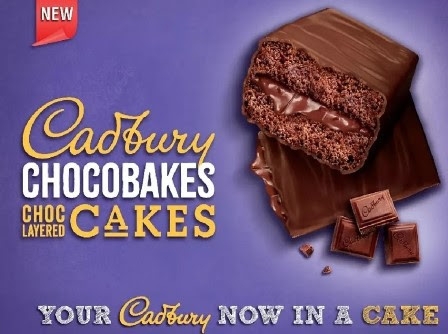
Cadbury Chocobakes : Cadbury inside

Brand: Cadbury Chocobakes
Company: Mondolez

Brand Analysis Count: 596


Ever since Mondolez International took over Cadbury, the brand has been on a roll, coming out with variants and new products. From a corporate umbrella brand, Cadbury had become an umbrella brand for all chocolate related products under Mondolez.

For a confectionary brand, brand architecture can be tricky and often confusing. This is because, one has the tendency to leverage the equity of a powerful brand at the same time, give enough room for various sub-brands to grow. We have seen that in the case of Diary Milk, where this brand has now become a family brand endorsing sub-brand- Silk and an innovative co-branding product with Oreo.
Mondolez in 2019 forayed into the biscuit market using Cadbury. The new cookie brand was named Cadbury Chocobakes which in a way is a new journey for the Cadbury brand. The Chocobakes brand was launched in the chocolate-filled cookie category which was pioneered by Sunfeast's Dark Fantasy Chocofills brand. 
The success of Dark Fantasy may have motivated Mondolez to extend the Cadbury brand into cookies since the chocolate inside made a perfect case for the extension of the Cadbury brand into biscuits. 
In 2020, Mondolez made another surprising move to enter the Rs 2000 crore packaged cake category with the Chocobakes brand. The brand has launched a choco-layered cake in 2020. Thus from a single product brand, Chocobakes within one year became an umbrella brand and in line to come a category brand endorsing further products in the cookies and cakes category. 

Both the products are positioned using the proposition " Cadbury (chocolate) inside" where these products derive their equity from the parent brand Cadbury. It makes perfect sense since Cadbury has such strong equity and connection with chocolates. 
This brings into the concept of products as platforms. Gone are the days where products are treated as a standalone entity with limited extensions and variants. The rising costs and lesser product-lifecycles are forcing firms to look at faster ways to bring the products to the mind of the customers. When a brand becomes successful, marketers are trying to leverage the equity by extending it to multiple categories. Products and brands are becoming more like platforms that facilitate multiple product- launches. The downside of this is the confusing brand architecture and often forgetting to strengthen the parent brand whose equity is being milked by a number of products across various categories. 

Monday, June 29, 2020

Brand Update : Neutrogena drops its fairness range

In an interesting move, Johnson&Johnson decided to drop the fairness product range from the Neutrogena brand line. Launched in 2005, Neutrogena wanted its share in the $450 mn fairness market in India but failed to catch up to the market leader HUL. The brand relied heavily on celebrity endorsements to gain traction in the market. 
According to news reports, J&J's decision to drop the fairness range is due to the growing pressure from the activist groups which consider fairness products as unethical products trying to exploit colour-based discrimination. The fairness product category has always been on the wrong side of marketing ethics. Activists feel that these products embed the seeds of colour-based discrimination and thus be banned. However, marketers feel that they are fulfilling a need of the consumers to look fairer and there is nothing unethical in that. This debate has become more prominent among the mainstream media with the recent racial discrimination issues that happened in the USA. The debate forced many marketers to relook their personal care portfolio through the lens of discrimination. 
Recently HUL also decided to remove the mention of fairness on their flagship brand Fair and Lovely. 
Marketers cannot be fully believed in what they say. The current actions can be another marketing move aimed to project the ethical side of these brands and owners. However, it is good to know that marketers are responding positively to the ethical issues raised by activists and reinforces the fact that the impact of society and activists group have a greater impact on marketing than ever before. 

Monday, June 22, 2020

Brand Update : For Savlon, Ownership changes everything

Since the launch of Savlon in India as early as 1993, the brand has struggled to become a mainstream brand in any of the segment it aspired to enter. Launched as a fighter brand against the market leader Dettol, Savlon couldn't make a sustained fight against Dettol. Even the brand owner Johnson & Johnson's equity did not help Savlon.
Then in 2015, the brand changed hands in India. ITC took over Savlon and the landscape changed to the brand. 
ITC had serious plans for Savlon and expanded the product range by launching sanitizers, liquid handwash etc which not only increased brand visibility at stores but also gave the brand entry to emerging categories in the personal hygiene segment.
The Covid-19 pandemic has proved to be a big boost for the brand because of the huge demand for sanitizers and handwash products. Savlon leveraging ITC's strong distribution network was able to make big inroads into the consumer's choice set.

Related Post

Wednesday, June 10, 2020

Kopiko : Anytime , Anywhere

Brand: Kopiko
Company: Mayora 

Brand Analysis Count: 595

Kopiko is a simple brand. It is India's popular pocket coffee candy brand. I was surprised to know that Kopiko is an international brand that too from Indonesia. The brand derives its name from the name of a Hawaiian coffee bean (Wiki). Kopiko was launched in India in 2008 and since then it has been a favourite candy brand. According to a report, Kopiko was the second-largest selling hard-boiled candy in India in 2017 with a sale of more than 350 crores. 

The brand has a simple proposition - it tastes like real coffee. That simple proposition and actual deliverables are what can create a good brand. And Kopiko was found to be delivering its promise and the brand was successful in gaining a fair share of the market.
India is a coffee-loving nation and that also has benefited the growth of this brand. There is competition for Kopiko in the market such as Coffy Bite which is a coffee flavoured confectionary but it is not a hard-boiled candy. Indian confectionery market is worth more than $1 billion and the market growth is more driven by the hard-boiled candy segment. 

Kopiko has been running various campaigns highlighting its major value proposition. Watch the new campaign :

The new campaign further extends the positioning by talking about the main benefit of coffee ie to keep awake. The advertisements of Kopiko is simple and straight forward and it conveys the brand's propositions well. The brand so far has not been adventurous in launching extensions or variants, which makes sense for such a simple brand. Internationally Kopiko is available in different coffee flavors. 

Wednesday, June 03, 2020

Brand Update : Fair & Lovely extends to soap again !

It was to happen and it happened (again). Fair & Lovely extended itself to the soap category. The creator and the market leader of fairness cream category have put a brave new front into the highly competitive and cluttered soap market. Although F&L created the fairness cream category, it was Godrej Fair &Glow who first created a fairness soap product. It is often seen in the marketing world, that pioneers often find themselves missing opportunities in related categories. 
It is not the first time that F&L is launching a soap. The first launch was in 2015 and then somehow nothing happened with the product in the market. 
In late 2019, the brand relaunched the soap extension as if nothing happened in 2015.
In a marketing perspective, the soap variant takes a dig on the competitor Fair & Glow by creating parity on the 'glow" proposition. The soap is promising glowing skin and the fairness promise is there from the parent brand. The launch ad is in line with the overall F&L positioning.

The soap is priced in line with market and this can be considered a masstige brand which is a strategy where the product is aspirational but priced reasonably so that a larger segment of customers can afford to purchase. 
Through extending the F&L, brand HUL is trying two outcomes. Firstly it wants to leverage the existing equity of F&L in the soap category. Secondly, HUL wants to reinforce its supremacy in the soap category by covering the entire category and not leaving any gap for the competition to take advantage. 


Sunday, March 29, 2020

Happenstance : Extreme Comfort Engineered

Brand: Happenstance
Company: Mosons Enterprises

Brand Analysis Count: 594


Happenstance is a new brand of footwear launched recently. The brand is making a lot of noises in the social media which interested me to further look into the brand's background. Although little is known about the brand owners, from the website it is found that the brand is owned by Kerala based Moson's Group. 
India is the third-largest footwear consuming country in the world with estimated market size of INR 32000 crore. 75% of the market is dominated by the unorganized sector. Since this is a crowded market, it takes a lot of effort to make a significant foothold in this market. 
Happenstance is primarily depending on the social media space to create a mark in the mind space of the consumers. And celebrity endorsement is often the preferred route for establishing awareness, especially for a new brand. 

Happenstance launched itself using high profile endorsements from celebrities like Sushmita Sen, Radhika Apte, Rajkummar Rao in their campaigns. The theme of the campaign focuses on testimonial theme to drive the brand's strengths to the consumers. Happenstance means coincidence and is quite an unusual name for a footwear brand which itself is a curiosity building element.
The brand is built on the positioning of comfort. Happenstance achieves this positioning through the smart use of two trademarked ingredient brands - Fluffium outsoles and Buoyance footbeds. The brand also smartly uses the concept of "engineering" to build authenticity to the claims. Happenstance uses the tagline " Extreme Comfort Engineered " which adds to the positioning. 
The social media promotion by the brand is done through a large number of influencer posts across the various media. Youtube is full of reviews and unboxing of the brands by fashion bloggers. The brand had also used traditional media to a certain extent featuring celebrities and fashion models. 

Footwear is an experiential product and the user's perception towards the brand's claims will vary. However, the brand has done its initial homework pretty well and the challenge is to keep the momentum going. A problem with celebrity-driven marketing is that while the celebrity helps the initial brand pull, brands often find it difficult to sustain the momentum without such expensive promotions in the long run. Comfort based positioning is currently unexplored in the market where most of the brands are talking about style. While Happenstance has identified the positioning gap, it has to be seen how the product performance takes it to the next level of growth. 

Monday, February 17, 2020

Brand Update : Reid & Taylor in trouble

A brand which once made a mark in the Indian luxury men's wear ( worsted suit category) is now in deep trouble. Owing to a large amount of debt of the parent company SKNL, the brand is on the block for sale and the company is facing bankruptcy proceedings. 
Reid & Taylor is a Scottish brand which is reported to have a rich legacy of 180 years. However, a google search on the parent brand yielded no results. 
The brand which was launched in India in 1998 had a good run in the Indian market backed by high-power advertisement campaign featuring Amitabh Bachchan. The brand then went on to expansion too fast trying to cover the large Indian market primarily through exclusive brand outlets. 
One of the mistakes that the brand made was to chase volume when the product is an expensive one. This strategy contradicts itself since volume game cannot be played in the luxury segment. So when you want to expand in the market through exclusive outlets, the company need to ensure that the franchisee will get the return either through high margin or high turnover. In the case of Reid & Taylor, the high cost of expansion from the parent company created a cash crunch which impacted the promotion which in turn affected the sales. 
Now the situation is such that SKNL case is pending with the NCLT and there are several suitors interested in taking over this once-famous brand. 

Related Post

Thursday, February 13, 2020

Vicco Vajradanti : Reinventing Itself

Brand : Vicco Vajaradanti
Company : Vicco

Brand Analysis Count: # 593


Vicco Vajradanti was one of the first products of Vicco which started its operations in a single room at the house of Sri Keshav Vishnu Pendharkar. Sri Pendharkar was a staunch believer of Ayurveda and wanted to create and popularise ayurvedic products in India. He started a small company named as Vishnu Industrial Chemicals Company in tribute to his father. This company later become popular as VICCO.  
Vajradanti was a toothpowder form in its early days and when the market shifted towards toothpaste, the company began to produce Vajradanti in the toothpaste form. Vicco Vajradanti quickly gained acceptance among people who were more inclined towards ayurvedic products. The brand was positioned as a true-blue ayurvedic product. 
Although the brand had a rich heritage and used to promote the products regularly, the toothpaste remained a niche player in the highly competitive market. Vicco was never an aggressive player in the market and slowly and surely, the brand failed to catch the attention of the new generation of customers. One should not forget that this brand was the pioneer in the sponsorship of television programs in India. This brand also was the first in putting their ads in video cassettes. 

This year, the brand is making a relaunch of sorts with the roping of Alia Bhatt as the brand ambassador. The new tvc features Alia and the famous jingle which made the brand famous. 

What the brand aims to do is to bring back the nostalgia using the old jingle and at the same time use the brand ambassador to appeal to the new generation of customers. 

The celebrity endorsement in recent years is being viewed as a panacea for all brand problems. The usage of celebrity in campaigns have become a norm which has in my opinion, commoditised this strategy.
Celebrities, if not used carefully is nothing but a glorified replacement of models in these advertisements. 
Same here in the case of Vajradanti. What best the brand can hope for is a quick dose of brand awareness in the market. To be fair to the brand, it needs a truckload of brand awareness to fight the high decibel war being fought on the toothpaste market especially in the ayurvedic segment.